Keeping a Diabetic Foot Wound Healing Through the Holidays
Thanksgiving travel, long hours on your feet and missed visits can stall a diabetic foot wound. Practical ways to keep it healing, and why a stalled wound should get a surgical plan now, not in January.
Medically reviewed by Dr. Efe Ozturk · Last reviewed
Published 6 min read
Thanksgiving is Thursday, November 26. Between travel, big meals and hours on your feet in the kitchen, the next six weeks make it easy for a diabetic foot wound to slip. These diabetic wound healing tips are built around the holidays. For the timeline of normal healing, see how long a diabetic foot ulcer takes to heal.
How can a diabetic wound heal faster over the holidays?
Pressure is the first enemy. The international offloading guideline ranks taking pressure off the wound as perhaps the single most important step in healing it.[5] Its first choice for an ulcer under the front or middle of the sole is a knee-high device you can’t take off, such as a total contact cast.[5]
Removable boots work only when they are on. In a study that hid a step counter inside removable walkers, people wore them for just 28% of their steps. Even the most careful wearers reached only 60%.[1] In a larger study of 79 people, removable devices were worn for 59% of activity on average, and better wearers had smaller ulcers at 6 weeks.[6]
The holidays are full of “just a few steps” without the boot: to the door to greet family, around the kitchen, through the airport. Those steps add up. If you have a removable offloading boot:
- Wear it for every step, including the night-time trip to the bathroom.
- Sit while you cook, carve or wrap gifts.
- Use a wheelchair at the airport. Ask the airline when you book.
- Ask us whether a cast would be easier to stick with for the season.
Keep your wound care visits, even holiday weeks
It is tempting to skip a visit during a holiday week. Regular cleaning of the wound is one of the reasons wounds heal. Debridement means removing dead tissue, callus and debris so healthy tissue can grow. In records of 312,744 wounds from 525 wound centers, wounds debrided more often healed more often and in less time.[2] See wound debridement.
Weekly visits also let us measure the wound. In a trial of 203 people seen weekly, ulcers that shrank more than the middle value for the group by 4 weeks healed by week 12 in 58% of cases. Those that shrank less healed in only 9%.[7] Missing two holiday visits can mean missing that 4-week signal. Book your November and December dates now; see wound care visits.
Does blood sugar affect wound healing?
Yes. In 183 people with 310 wounds at a wound center, A1c (your average blood sugar over 2 to 3 months) was the only factor measured that was linked to how fast wounds shrank. The higher the A1c, the slower the healing.[8]
A few holiday habits help:
- Keep taking your diabetes medicines on schedule, including on travel days.
- Ask your diabetes team before the holiday how to plan big meals and when to check your blood sugar.
- Bring your meter and supplies when you travel.
Traveling with a diabetic foot wound
Long trips bring a second risk: blood clots. Anyone traveling more than 4 hours by car, plane, bus or train can be at risk. Diabetes, recent surgery and a leg cast are among the factors that raise it.[9] The CDC advises moving your legs often and walking every 1 to 2 hours.[9] With an open ulcer, ask us how to do that safely in your cast or boot.
Call your doctor as soon as possible for swelling, pain, warmth or redness in a leg. Get emergency care right away for trouble breathing, chest pain or fainting, which can mean a clot has reached the lungs.[9]
Pack your dressings, a spare boot liner and our phone number. Check your foot every evening, wherever you are.
When to plan surgery instead of waiting
The ADA’s guidance is clear: if a wound hasn’t shrunk by 50% after 4 weeks of good care, a step up in treatment should be considered. It also says an ulcer that won’t heal needs a check for a deformity that surgical offloading should correct, and for bone infection.[3] Waiting out the holidays on a plan that isn’t working means another 4 to 6 weeks lost.
Surgery removes the pressure for good:
- Offloading surgery. If casts or boots fail to heal a forefoot ulcer, the guideline advises considering Achilles tendon lengthening, metatarsal head resection, joint arthroplasty or a metatarsal osteotomy. For a toe ulcer from a flexible bent toe, it advises a toe tendon release (flexor tenotomy).[5]
- Results. In a 2024 pooled analysis of randomized trials, surgical offloading plus a boot or cast after surgery healed more ulcers than offloading devices alone.[4]
See offloading surgery and the Center for Lower Extremity Surgery’s page on a related calf release, gastrocnemius recession (external site).
Dr. Efe Ozturk, a Foot and Ankle Surgeon who is double board certified, including in wound care (FAPWH), performs Achilles lengthening, toe tendon release, metatarsal head resection, bone surgery, skin grafts and flaps, and surgical debridement. Wound VAC therapy and skin substitutes are available when they fit, and when hyperbaric oxygen might help, we refer you.
Limits
The boot-wearing studies were small.[1,6] The debridement and blood sugar findings come from records, which show links, not proof of cause.[2,8] For surgical offloading, the pooled analysis’s authors called for larger trials with longer follow-up.[4]
Common questions
How can a diabetic wound heal faster?
Keep all pressure off it, keep your debridement visits, and keep your blood sugar in range. If it hasn’t halved in 4 weeks, ask about surgery.[5,2,3]
Can I take my offloading boot off for a holiday party?
Not if you can avoid it. Every step without it puts pressure back on the wound, and better wearers had smaller ulcers.[6]
Is it safe to fly with a diabetic foot ulcer?
Usually, with planning. Ask us first, wear your boot, and move your legs often on trips over 4 hours.[9]
Should I wait until after the holidays for foot surgery?
Not if your wound has stalled. In one trial, ulcers that shrank less than the middle value by 4 weeks healed by week 12 in only 9% of cases.[7]
The bottom line
The holidays don’t have to set your wound back. Wear the boot for every step, keep your visits, and keep your blood sugar steady. If the wound has stalled, plan the surgery now so January starts with a healing foot.
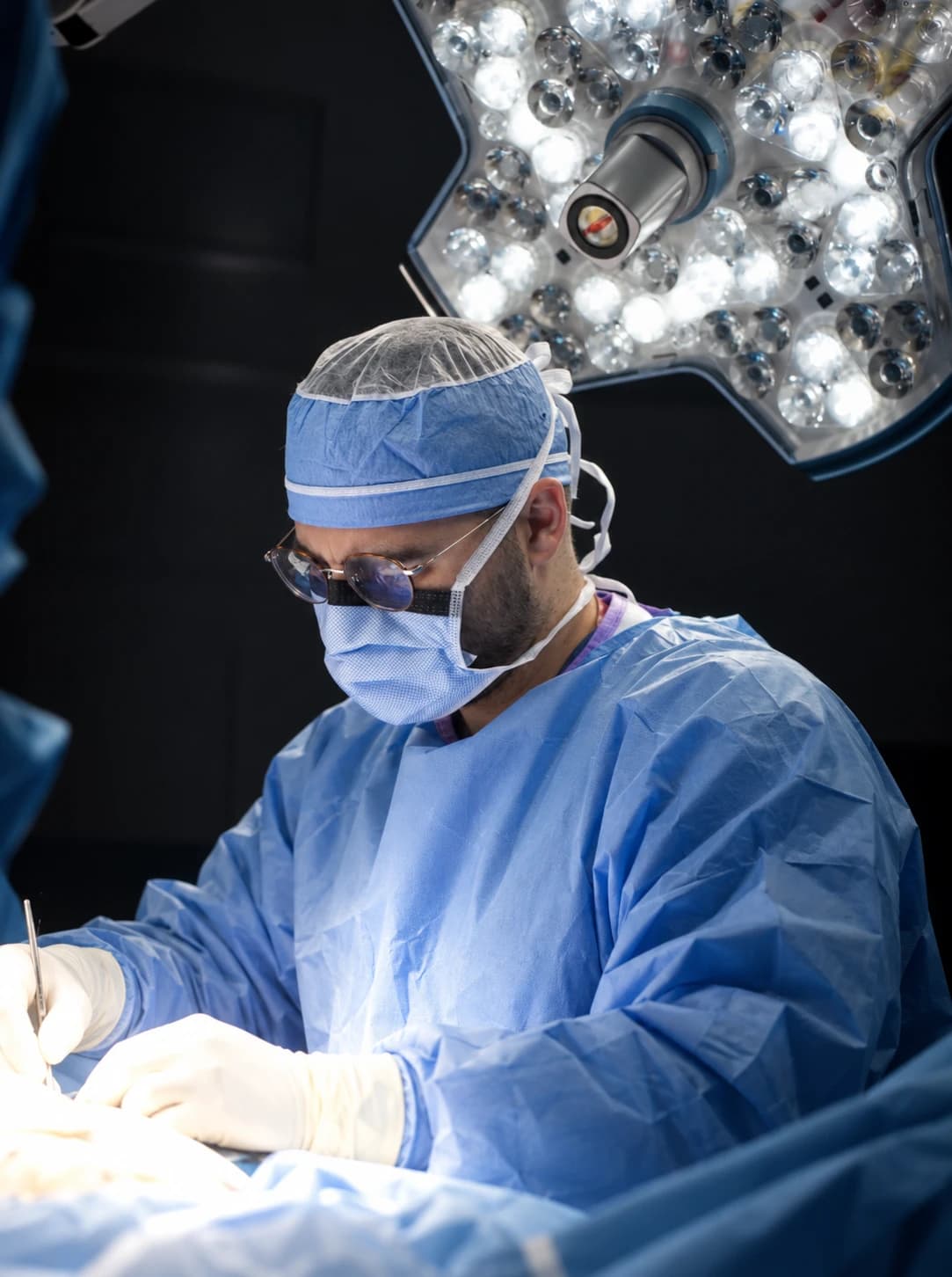
Reviewing surgeon
Foot and Ankle Surgeon at Limb Salvage Institute, a specialty practice of Ozturk Foot & Ankle. Dr. Ozturk is double board certified, as a Diplomate of the American Board of Podiatric Medicine (DABPM) and a Fellow of the Academy of Physicians in Wound Healing (FAPWH), and is a Fellow of the American Society of Podiatric Surgeons (FASPS) and the American Society of Podiatric Medicine (FASPM).
References
- 1.Armstrong DG, Lavery LA, Kimbriel HR, Nixon BP, Boulton AJ. Activity patterns of patients with diabetic foot ulceration: patients with active ulceration may not adhere to a standard pressure off-loading regimen. Diabetes Care. 2003;26(9):2595-7. PubMed 12941724 (external site)
- 2.Wilcox JR, Carter MJ, Covington S. Frequency of debridements and time to heal: a retrospective cohort study of 312 744 wounds. JAMA Dermatol. 2013;149(9):1050-8. PubMed 23884238 (external site)
- 3.American Diabetes Association Professional Practice Committee for Diabetes. 12. Retinopathy, Neuropathy, and Foot Care: Standards of Care in Diabetes-2026. Diabetes Care. 2026;49(Suppl 1):S261-S276. PubMed 41358886 (external site)
- 4.Gauna C, Romeo F, Scatena A, et al. Offloading systems for the treatment of neuropathic foot ulcers in patients with diabetes mellitus: a meta-analysis of randomized controlled trials for the development of the Italian guidelines for the treatment of diabetic foot syndrome. Acta Diabetol. 2024;61(6):693-703. PubMed 38489054 (external site)
- 5.Bus SA, Armstrong DG, Crews RT, Gooday C, Jarl G, Kirketerp-Moller K, et al. Guidelines on offloading foot ulcers in persons with diabetes (IWGDF 2023 update). Diabetes Metab Res Rev. 2024;40(3):e3647. PubMed 37226568 (external site)
- 6.Crews RT, Shen BJ, Campbell L, et al. Role and Determinants of Adherence to Off-loading in Diabetic Foot Ulcer Healing: A Prospective Investigation. Diabetes Care. 2016;39(8):1371-7. PubMed 27271185 (external site)
- 7.Sheehan P, Jones P, Caselli A, et al. Percent change in wound area of diabetic foot ulcers over a 4-week period is a robust predictor of complete healing in a 12-week prospective trial. Diabetes Care. 2003;26(6):1879-82. PubMed 12766127 (external site)
- 8.Christman AL, Selvin E, Margolis DJ, Lazarus GS, Garza LA. Hemoglobin A1c predicts healing rate in diabetic wounds. J Invest Dermatol. 2011;131(10):2121-7. PubMed 21697890 (external site)
- 9.Centers for Disease Control and Prevention. Understanding Your Risk for Blood Clots with Travel. cdc.gov (external site)
This article is general health information and isn’t a substitute for advice from a clinician who knows your history. Read our medical disclaimer and how we review content.
Learn more about this
Treatment
Total contact casting
A knee-high cast or locked walker you can’t take off, which spreads pressure away from a foot ulcer so it can heal.
Treatment
Offloading boots and footwear
The removable boots, healing sandals, braces and therapeutic shoes that take pressure off a diabetic foot ulcer or a Charcot foot, how to wear them, and when surgery takes over.
Treatment
Wound care visits
What happens at a wound care visit, how often you’re seen, what you do at home, and when wound care steps up to surgery.
Treatment
Wound debridement
Removing callus and dead tissue from a foot wound, in the office or the operating room, so the wound can heal.
Treatment
Offloading surgery
Operations on the calf, Achilles or toe tendons (and sometimes a metatarsal bone) that take pressure off an ulcer so it heals and is less likely to come back.
Condition
Diabetic foot ulcers
Open sores on the feet of people with diabetes, and the step-by-step care, including surgery when it’s needed, that aims to heal them and keep them closed.
Keep reading
Ulcers & offloading
How Long Should a Diabetic Foot Ulcer Take to Heal, and When Is It Time for Surgery?
Many diabetic foot ulcers take three months or more to heal, and the first four weeks show whether yours is on track. What normal healing looks like and when it is time for surgery.
7 min read
Ulcers & offloading
Life in a Total Contact Cast: What the First Weeks Are Like
A total contact cast stays on day and night for several weeks. What casting day, cast changes, showers, sleep, work and driving are like, and when to call us.
9 min read
Limb salvage surgery
Achilles Lengthening for Forefoot Ulcers That Keep Coming Back
A tight calf can keep an ulcer under the ball of the foot from healing or staying healed. Who the operation suits, what the trials found and the trade-offs.
9 min read
On the Ozturk Foot & Ankle blog
General foot care and non-surgical basics, from our parent practice.