Can Peripheral Artery Disease Be Reversed? What Restores Blood Flow and Saves the Foot
The plaque in PAD isn’t erased by lifestyle alone, but blood flow can be restored. What walking, medicines and procedures each do, and why restoring flow and then foot surgery saves limbs.
Medically reviewed by Dr. Efe Ozturk · Last reviewed
Published 7 min read
Peripheral artery disease (PAD) means plaque has narrowed the arteries that carry blood to your legs and feet.[1] Hearing “there’s no reversing it” can sound like there’s nothing to do. That isn’t the case. What matters is restoring enough blood flow to walk, heal and keep your foot, and that can often be done. For the warning signs and first tests, see our parent practice’s guide to poor circulation in the feet. This article is about what treatment can and can’t undo.
Can peripheral artery disease be reversed?
Not in the sense of making the plaque disappear. Treatment aims to ease symptoms, help you walk farther, lower the risk of heart attack and stroke, and lower the risk of losing a limb.[1]
- Walking does not reopen the artery. In a review of 32 trials, exercise programs added about 82 meters of pain-free walking and 120 meters of maximum walking, with benefits lasting up to two years. But the ankle-brachial index, the blood pressure ratio that measures the narrowing, did not improve.[2]
- Medicines slow it and protect you. Statins lower cholesterol and can slow plaque buildup.[1] In 51 studies of 138,060 people with PAD, mostly observational, statin use was linked with 30% fewer major limb events and 35% fewer amputations.[4]
- A procedure restores flow. Angioplasty opens a narrowed artery with a small balloon, sometimes leaving a mesh tube called a stent. Bypass surgery builds a new path around the blockage with one of your own veins or a man-made tube.[1] This is the step that improves blood flow to the foot itself.[3]
When does restoring blood flow make the biggest difference?
For leg pain with walking. In a Dutch trial of 212 people with walking pain, those who had an artery-opening procedure plus supervised exercise could walk 1,237 meters farther at one year than at the start, against 955 meters with exercise alone. Pain-free walking rose by 1,120 meters against 712, and quality of life improved more.[5]
For a foot wound. Here, restoring flow is often what decides whether the foot heals. The diabetic foot circulation guideline advises considering a procedure to restore flow for anyone with diabetes, PAD, a foot ulcer and signs of poor flow, such as missing pulses or a toe pressure under 60 mmHg.[3] With severe loss of flow, such as a toe pressure under 30 mmHg, it calls for an urgent vascular consultation, and it advises rechecking circulation when an ulcer hasn’t shrunk by about half in 4 weeks of good care.[3]
Which procedure. In BEST-CLI, a trial of people with limb-threatening PAD who had a good leg vein, bypass surgery led to fewer major limb events or deaths than a balloon or stent approach (42.6% vs 57.4% over a median of 2.7 years).[6] The guideline suggests bypass first in that situation when either is possible, and says the goal is a straight path of blood to at least one artery of the foot.[3]
Why foot surgery follows restored blood flow
Better flow lets a foot heal, but it doesn’t remove dead tissue, infected bone or the pressure point that caused the ulcer. That is the Foot and Ankle Surgeon’s part. When infection and poor flow occur together, the guideline calls for urgent input from a vascular specialist to time drainage of the infection and the procedure to restore flow.[3] After the procedure, blood flow to the foot should be rechecked with a test, and care should come from a team.[3]
Dr. Efe Ozturk is a Foot and Ankle Surgeon who is double board certified, including in wound care (FAPWH). We check circulation with noninvasive tests at our practice and refer you to a vascular specialist, who performs angioplasty or bypass. Then Dr. Ozturk drains infection, removes dead tissue and infected bone and, for the feet that need it, performs a toe or partial foot amputation that keeps as much of the foot as possible. See peripheral artery disease and foot wounds, restoring blood flow and limb salvage surgery.
How to treat peripheral artery disease: what works together
| Treatment | What it does | Keep in mind |
|---|---|---|
| Walking program | Adds walking distance and may improve quality of life | Didn’t raise the ankle-brachial index in trials |
| Statins and blood pressure medicines | Slow plaque buildup and lower the risk of complications | Limb evidence for statins is mostly observational |
| Antiplatelet or low-dose blood thinner | Lowers the risk of clots and limb events | Adds some bleeding risk |
| Angioplasty, stent or bypass | Restores blood flow to the leg and foot | Carries procedure risk; treated arteries are rechecked |
| Foot surgery | Removes what can’t heal so the wound can close | Timed with infection control and restored flow |
For people with diabetes and PAD, the guideline sets targets such as an LDL cholesterol under 70 mg/dL and an A1C under 8% for most, plus a single antiplatelet medicine; adding low-dose rivaroxaban to aspirin may be considered when bleeding risk is low.[3] After a leg artery procedure, that combination lowered a composite of limb loss, sudden limb artery blockage, heart attack, stroke and heart death from 19.9% to 17.3% over three years, with more major bleeding by one definition.[7] Quitting smoking can reduce symptoms and complications.[1] Your doctors decide these medicines with you.
What are the limits?
In the Dutch trial, the walking advantage of the procedure had faded by about five years, and the procedure group had more artery procedures in total (149 vs 65).[8] In BEST-CLI, people without a good vein did about as well with either approach.[6] Exercise trials found no clear effect on amputation.[2] Restoring flow carries risk: about 2 in 100 people with diabetes die within 30 days of either type of procedure, about 5 in 100 with end-stage kidney failure. The guideline rates the evidence on healing and amputation as low certainty and advises against a procedure when the chance of success is clearly poor.[3]
Common questions
Can peripheral artery disease go away?
Medicines can slow plaque buildup, and a procedure can open or bypass a blocked artery.[1] Many people walk farther and heal wounds once flow improves.[2,3]
How is peripheral artery disease diagnosed?
Usually with a pulse check, the ankle-brachial index and, with a foot wound, a toe pressure, which helps predict healing; a toe pressure of 30 mmHg or more raises the likelihood of healing.[3] See circulation tests for foot wounds.
Can walking open blocked arteries?
Walking programs improve how far you can walk, but trials found they didn’t change the ankle-brachial index.[2] They work alongside, not instead of, a procedure when a wound needs more flow.
Do I need a vascular surgeon or a foot surgeon?
With a foot wound, often both. The guideline advises care from a team, with a vascular specialist restoring flow and the foot treated alongside.[3] Our sister practice explains cold feet versus numb feet (external site) if you’re unsure whether circulation or nerves are the problem.
The bottom line
Peripheral artery disease isn’t reversed by lifestyle alone, but much of what it takes away can be improved: walking distance through exercise, and blood flow through a procedure. For a foot wound, restoring flow and then the right foot operation can save the limb. Don’t wait for a wound to stall before having your circulation checked.
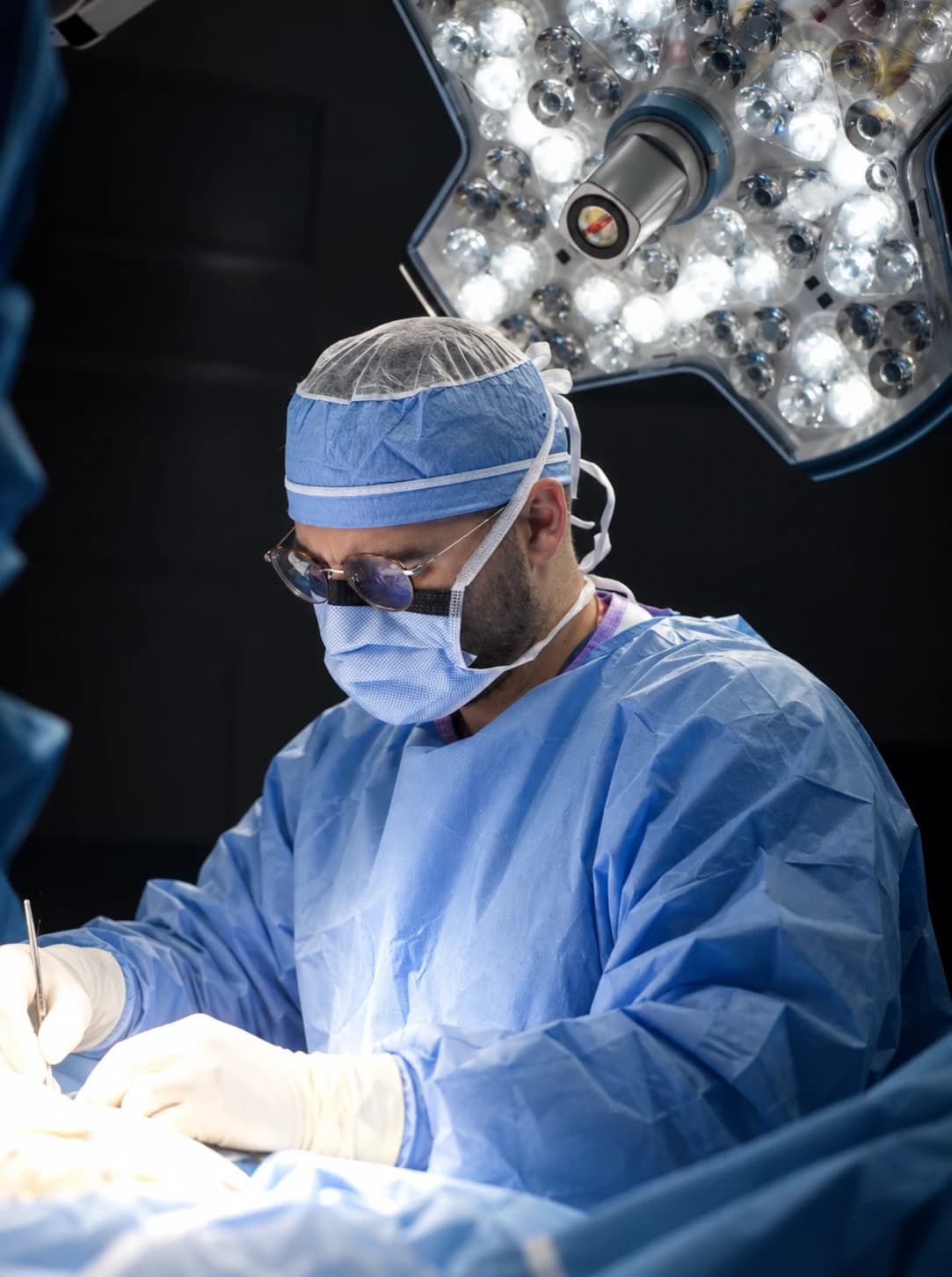
Reviewing surgeon
Foot and Ankle Surgeon at Limb Salvage Institute, a specialty practice of Ozturk Foot & Ankle. Dr. Ozturk is double board certified, as a Diplomate of the American Board of Podiatric Medicine (DABPM) and a Fellow of the Academy of Physicians in Wound Healing (FAPWH), and is a Fellow of the American Society of Podiatric Surgeons (FASPS) and the American Society of Podiatric Medicine (FASPM).
References
- 1.National Heart, Lung, and Blood Institute. Peripheral Artery Disease: Treatment. NIH. Updated March 24, 2022. nhlbi.nih.gov (external site)
- 2.Lane R, Harwood A, Watson L, Leng GC. Exercise for intermittent claudication. Cochrane Database Syst Rev. 2017;12(12):CD000990. PubMed 29278423 (external site)
- 3.Fitridge R, Chuter V, Mills J, Hinchliffe R, Azuma N, Behrendt CA, et al. The intersocietal IWGDF, ESVS, SVS guidelines on peripheral artery disease in people with diabetes and a foot ulcer. Diabetes Metab Res Rev. 2024;40(3):e3686. PubMed 37726988 (external site)
- 4.Pastori D, Farcomeni A, Milanese A, et al. Statins and Major Adverse Limb Events in Patients with Peripheral Artery Disease: A Systematic Review and Meta-Analysis. Thromb Haemost. 2020;120(5):866-875. PubMed 32369857 (external site)
- 5.Fakhry F, Spronk S, van der Laan L, et al. Endovascular Revascularization and Supervised Exercise for Peripheral Artery Disease and Intermittent Claudication: A Randomized Clinical Trial. JAMA. 2015;314(18):1936-44. PubMed 26547465 (external site)
- 6.Farber A, Menard MT, Conte MS, et al. Surgery or Endovascular Therapy for Chronic Limb-Threatening Ischemia. N Engl J Med. 2022;387(25):2305-2316. PubMed 36342173 (external site)
- 7.Bonaca MP, Bauersachs RM, Anand SS, et al. Rivaroxaban in Peripheral Artery Disease after Revascularization. N Engl J Med. 2020;382(21):1994-2004. PubMed 32222135 (external site)
- 8.Klaphake S, Fakhry F, Rouwet EV, et al. Long-term Follow-up of a Randomized Clinical Trial Comparing Endovascular Revascularization Plus Supervised Exercise With Supervised Exercise Only for Intermittent Claudication. Ann Surg. 2022;276(6):e1035-e1043. PubMed 33378308 (external site)
This article is general health information and isn’t a substitute for advice from a clinician who knows your history. Read our medical disclaimer and how we review content.
Learn more about this
Condition
Peripheral artery disease
Narrowed leg arteries that starve a foot wound of blood, and the vascular procedures and foot surgery that aim to restore circulation, heal the wound and keep the foot.
Treatment
Restoring blood flow
Angioplasty, stents and bypass, performed by vascular specialists, restore blood flow to a foot wound that is starved of it; we test circulation, refer you and time foot surgery and wound care around the procedure.
Diagnosis guide
Circulation tests
How ankle and toe pressures, Doppler waveforms, TcPO2 and artery imaging measure blood flow to a foot wound, and how the results guide healing, surgery and vascular referral.
Treatment
Limb salvage surgery
Operations that clear infection, remove infected bone, take pressure off ulcers, rebuild collapsed feet and close wounds, with the aim of saving the foot and keeping you walking.
Treatment
Partial foot amputation
Surgery that removes only the part of the foot that can’t heal, from a single toe to the midfoot, keeping as much of the foot as is safe, to help you keep walking.
Keep reading
Circulation & healing
Why Ankle Pressures Can Look Normal With Diabetes: Toe Pressures Explained
Calcified leg arteries can make ankle pressures look normal, or even high, when the foot is short of blood. Why toe pressures give a truer picture, and how the numbers shape wound care and surgery.
9 min read
Limb salvage surgery
Can Gangrene Toes Be Saved? What Decides How Much of the Foot Stays
Dead tissue can’t come back, but restoring blood flow and prompt, precise surgery can protect the rest of the foot. When to go to the emergency room, and how a surgeon chooses the level.
8 min read
Ulcers & offloading
Why Diabetic Foot Ulcers Don’t Heal: The Five Usual Reasons and What Fixes Each
A stalled ulcer usually has a cause a dressing can’t reach, and four of the five usual causes have a surgical or procedural answer. How each is found, what fixes it, and when surgery closes the wound.
7 min read
On the Ozturk Foot & Ankle blog
General foot care and non-surgical basics, from our parent practice.