Why Diabetic Foot Ulcers Don’t Heal: The Five Usual Reasons and What Fixes Each
A stalled ulcer usually has a cause a dressing can’t reach, and four of the five usual causes have a surgical or procedural answer. How each is found, what fixes it, and when surgery closes the wound.
Medically reviewed by Dr. Efe Ozturk · Last reviewed
Published 7 min read
An ulcer that stays open for weeks wears you down. About 30% to 40% of diabetic foot ulcers heal by 12 weeks, and 23% are still open at 12 months.[5] Most heal when treatment follows the guideline’s principles,[4] and for those that stall, a Foot and Ankle Surgeon has options a dressing doesn’t. See our guide to diabetic foot ulcers.
Why diabetic foot ulcers don’t heal: the five usual reasons
First, measure. In a trial of 203 people, ulcers that shrank more than the median by week 4 healed by week 12 in 58% of cases, against 9% of the rest.[6] The circulation guideline agrees: if an ulcer hasn’t shrunk by at least half in four weeks despite good care, recheck its blood supply and review the plan.[3]
| Reason | How it is found | What fixes it |
|---|---|---|
| Pressure | Foot exam, walking, callus, your shoes | Knee-high offloading device, and offloading surgery when that fails or for a bent toe |
| Blood flow | Pulses, Doppler, ankle and toe pressures | A procedure by a vascular specialist |
| Infection | Exam, probe test, X-ray, tissue culture | Surgery if deep, with targeted antibiotics |
| Dead tissue | Looking under callus and at the wound bed | Sharp debridement, repeated as needed |
| Blood sugar and smoking | Your A1C and health history | Better glucose control, quitting smoking |
When is surgery the step that closes a diabetic foot ulcer?
Surgery changes the foot itself. The offloading guideline calls it a longer-lasting way to take pressure off, one that works even when a device isn’t worn.[1] It also clears what no dressing can.
- Toe ulcers: tendon release. For an ulcer on the tip or underside of a flexible bent smaller toe, the guideline strongly recommends releasing the tendon that curls the toe (a flexor tenotomy) as a first-line treatment.[1] Across six studies, 97% of treated ulcers healed, in about a month on average.[7] In a small randomized trial, all 8 ulcers healed with the release, against 3 of 8 without it.[8]
- Ball-of-the-foot ulcers: Achilles lengthening. If non-surgical offloading hasn’t healed an ulcer under a metatarsal head (the bone end at the ball of the foot), the guideline suggests considering this operation along with a device.[1] In a trial of 64 people with limited ankle motion, ulcers healed in both groups (all 30 with lengthening and a cast, 88% with a cast alone). The gain came afterward: at two years, 38% had another ulcer, against 81%.[9]
- Bone procedures. After failed offloading, the guideline also suggests considering removing the metatarsal head. For a big toe ulcer it suggests reshaping the joint, and for the other metatarsal heads, realigning the bone.[1] Infected bone may also need surgical removal.[10]
- Clearing infection. For moderate and severe infections, the guideline suggests considering surgery within 24 to 48 hours to remove infected and dead tissue. Studies looking back at hospital care linked earlier surgery with fewer major amputations and more healing.[10]
- Restoring blood flow. After a procedure, most studies report that 80% to 85% keep the limb and more than 60% of ulcers heal at 12 months.[3]
- Covering a clean wound. Across 11 studies of 757 people, 85.5% of mostly leg and upper-foot diabetic ulcers healed after a skin graft, in about five weeks on average.[11]
Dr. Efe Ozturk, a Foot and Ankle Surgeon who is board certified in wound care (FAPWH), performs Achilles lengthening, toe tendon release, metatarsal head resection, surgery for deep infection and infected bone, and skin grafts for the ulcers that need them. Vascular specialists restore blood flow, and we coordinate with them. See surgery that takes pressure off ulcers and the Center for Lower Extremity Surgery’s page on diabetic foot ulcers (external site).
1. Pressure: are you still walking on it?
The guideline on offloading, or taking pressure off an ulcer, calls it arguably the most important step in healing.[1]
For a nerve-related ulcer under the forefoot or midfoot, the first choice is a knee-high device that can’t be taken off.[1] These likely heal more ulcers than removable devices, based on 14 studies.[12] With infection or poor blood flow, offloading still matters, but more caution is needed.[4] See total contact casting.
2. Blood flow: is enough reaching the wound?
About half of people with diabetes and a foot ulcer also have peripheral artery disease (PAD), or narrowed leg arteries.[3]
A toe pressure of at least 30 mmHg (a blood pressure unit) raises the likelihood of healing, and a lower one raises the likelihood of major amputation.[3] With severely reduced flow, the guideline calls for an urgent visit with a vascular specialist.[3] If an ulcer shows no sign of healing in 4 to 6 weeks despite good care, it advises considering artery imaging and a procedure to restore flow, even when earlier tests looked acceptable.[4] See restoring blood flow.
3. Infection: is it hiding?
About 50% to 60% of diabetic foot ulcers become infected.[5] Nerve damage and poor circulation can blunt the usual signs, and fever is often absent in mild and moderate infections. A sterile probe checks whether the wound reaches bone, and a tissue sample is preferred over a swab. The fix is surgery for deep infection, as above, and antibiotics matched to the culture.[4] See bone infection of the foot.
4. Dead tissue: what is the wound sitting under?
Callus and dead tissue can hide how deep an ulcer really is. The guideline advises debridement, or removing that tissue, at the first visit or as soon as possible, except in an uninfected wound with severe loss of blood flow.[4]
The fix is sharp debridement, done with a scalpel or similar instrument, as often as the wound needs.[2] See wound debridement.
5. Blood sugar and smoking: what is slowing you down?
The guideline says to optimize blood sugar.[4] The evidence on healing is less tidy: a 2016 Cochrane review found no completed trials of tight control for healing ulcers,[13] and across 47 observational studies, an A1C (a three-month blood sugar average) of 8% or higher was tied to far higher odds of amputation, but not clearly to healing.[14] On smoking, 18 observational studies put average healing at 62.1% for smokers and 71.5% for nonsmokers.[15] We work with your other doctors on both.
What are the limits of surgery for foot ulcers?
Surgery works alongside offloading, infection control and good blood flow, not instead of them. Offloading surgery isn’t done when blood flow is severely reduced.[1] Pooled trials found healing no better with Achilles or calf procedures than with a cast alone; the gain was fewer ulcers coming back.[16] Tendon procedures can shift pressure and cause new sores elsewhere, including heel ulcers after Achilles lengthening, and the evidence is of low to moderate certainty.[12] Some forefoot bone infections can be treated with antibiotics alone.[10] Debridement belongs in the operating room only when it can’t be done safely in the office, and the healing guideline suggests against routine skin substitutes and says not to use skin graft products made from your own skin as an add-on, based on low-certainty evidence.[2]
Common questions
Can a diabetic foot ulcer heal completely?
Yes. Most ulcers heal with care that follows the guideline.[4] The foot stays at risk, though: an estimated 42% of people develop another ulcer within a year and 65% within five years, which is one reason surgery that corrects the pressure point matters.[5]
How do you treat a diabetic foot ulcer at home?
Home care supports treatment but doesn’t replace it. A two-minute daily foot check helps you catch changes.
What is the treatment for a diabetic foot ulcer that won’t heal?
First, recheck pressure, blood flow and infection, because each may have a procedure that fixes it. If an uninfected ulcer still hasn’t healed after 4 to 6 weeks of good care, the guideline suggests considering add-ons such as placental membrane grafts, or hyperbaric oxygen for ulcers with poor blood flow.[4] We offer skin substitutes for the wounds that need them, and we refer you for hyperbaric oxygen when it fits.
When does a diabetic foot ulcer need surgery?
Four of the five usual causes have a surgical or procedural answer: debridement, Achilles lengthening, a toe tendon release, bone procedures, grafts, and restoring blood flow.[1,2,3] We look for the cause first, and the procedure follows what we find.
The bottom line
A diabetic foot ulcer that won’t heal has a reason, and there is often more than one. Most of those reasons have a surgical or procedural answer. If four weeks of care hasn’t cut the wound in half, have a surgeon look at why, because surgery may be what closes it and keeps it closed.
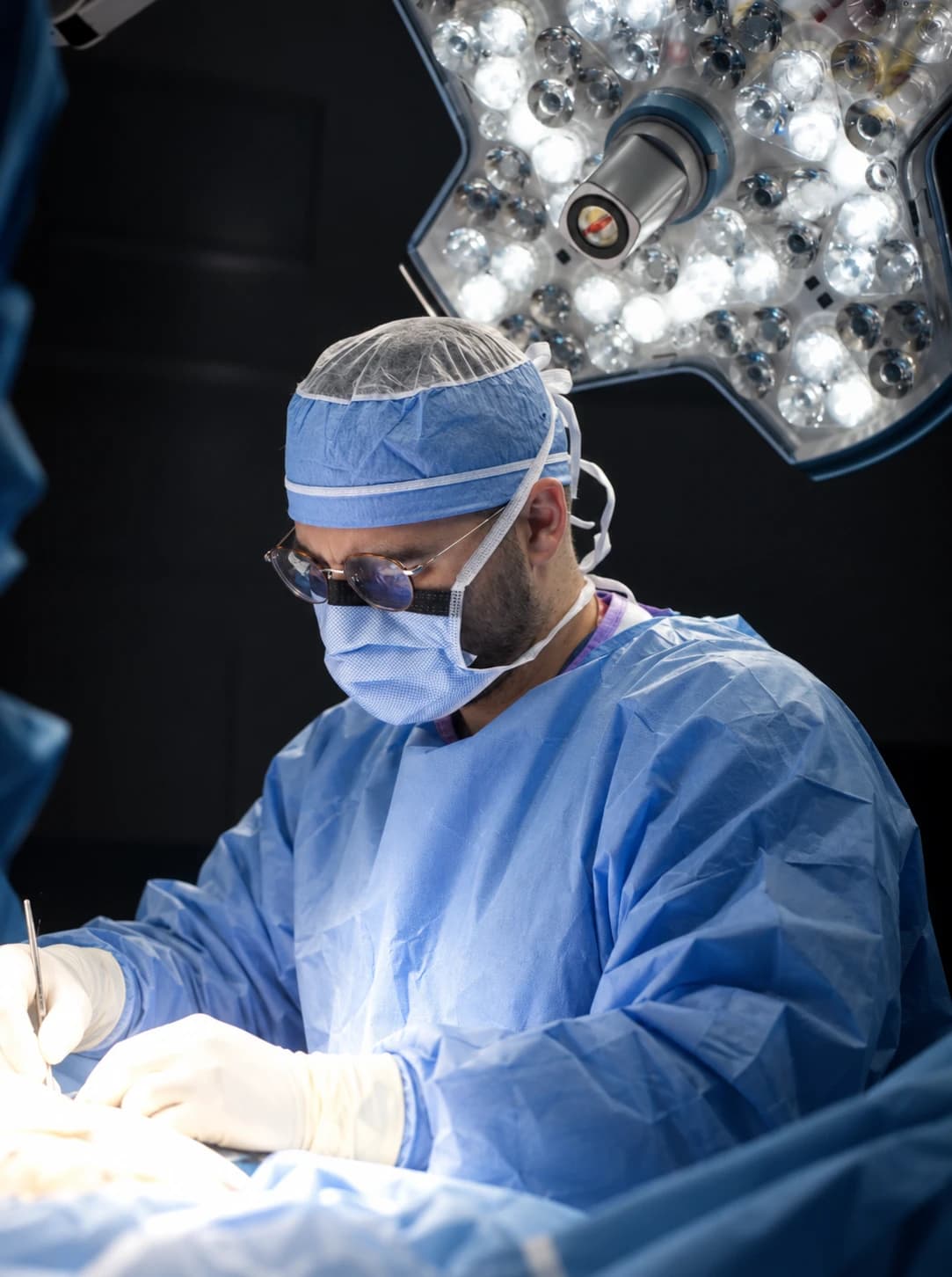
Reviewing surgeon
Foot and Ankle Surgeon at Limb Salvage Institute, a specialty practice of Ozturk Foot & Ankle. Dr. Ozturk is double board certified, as a Diplomate of the American Board of Podiatric Medicine (DABPM) and a Fellow of the Academy of Physicians in Wound Healing (FAPWH), and is a Fellow of the American Society of Podiatric Surgeons (FASPS) and the American Society of Podiatric Medicine (FASPM).
References
- 1.Bus SA, Armstrong DG, Crews RT, Gooday C, Jarl G, Kirketerp-Moller K, et al. Guidelines on offloading foot ulcers in persons with diabetes (IWGDF 2023 update). Diabetes Metab Res Rev. 2024;40(3):e3647. PubMed 37226568 (external site)
- 2.Chen P, Vilorio NC, Dhatariya K, Jeffcoate W, Lobmann R, McIntosh C, et al. Guidelines on interventions to enhance healing of foot ulcers in people with diabetes (IWGDF 2023 update). Diabetes Metab Res Rev. 2024;40(3):e3644. PubMed 37232034 (external site)
- 3.Fitridge R, Chuter V, Mills J, Hinchliffe R, Azuma N, Behrendt CA, et al. The intersocietal IWGDF, ESVS, SVS guidelines on peripheral artery disease in people with diabetes and a foot ulcer. Diabetes Metab Res Rev. 2024;40(3):e3686. PubMed 37726988 (external site)
- 4.Schaper NC, van Netten JJ, Apelqvist J, Bus SA, Fitridge R, Game F, et al. Practical guidelines on the prevention and management of diabetes-related foot disease (IWGDF 2023 update). Diabetes Metab Res Rev. 2024;40(3):e3657. PubMed 37243927 (external site)
- 5.Armstrong DG, Tan TW, Boulton AJM, et al. Diabetic Foot Ulcers: A Review. JAMA. 2023;330(1):62-75. PubMed 37395769 (external site)
- 6.Sheehan P, Jones P, Caselli A, et al. Percent change in wound area of diabetic foot ulcers over a 4-week period is a robust predictor of complete healing in a 12-week prospective trial. Diabetes Care. 2003;26(6):1879-82. PubMed 12766127 (external site)
- 7.Bonanno DR, Gillies EJ. Flexor Tenotomy Improves Healing and Prevention of Diabetes-Related Toe Ulcers: A Systematic Review. J Foot Ankle Surg. 2017;56(3):600-604. PubMed 28476394 (external site)
- 8.Askø Andersen J, Rasmussen A, Engberg S, et al. Flexor Tendon Tenotomy Treatment of the Diabetic Foot: A Multicenter Randomized Controlled Trial. Diabetes Care. 2022;45(11):2492-2500. PubMed 36151947 (external site)
- 9.Mueller MJ, Sinacore DR, Hastings MK, et al. Effect of Achilles tendon lengthening on neuropathic plantar ulcers. A randomized clinical trial. J Bone Joint Surg Am. 2003;85(8):1436-45. PubMed 12925622 (external site)
- 10.Senneville É, Albalawi Z, van Asten SA, Abbas ZG, Allison G, Aragón-Sánchez J, et al. IWGDF/IDSA guidelines on the diagnosis and treatment of diabetes-related foot infections (IWGDF/IDSA 2023). Diabetes Metab Res Rev. 2024;40(3):e3687. PubMed 37779323 (external site)
- 11.Yammine K, Assi C. A Meta-Analysis of the Outcomes of Split-Thickness Skin Graft on Diabetic Leg and Foot Ulcers. Int J Low Extrem Wounds. 2019;18(1):23-30. PubMed 30841767 (external site)
- 12.Lazzarini PA, Armstrong DG, Crews RT, et al. Effectiveness of offloading interventions for people with diabetes-related foot ulcers: A systematic review and meta-analysis. Diabetes Metab Res Rev. 2024;40(3):e3650. PubMed 37292021 (external site)
- 13.Fernando ME, Seneviratne RM, Tan YM, et al. Intensive versus conventional glycaemic control for treating diabetic foot ulcers. Cochrane Database Syst Rev. 2016;2016(1):CD010764. PubMed 26758576 (external site)
- 14.Lane KL, Abusamaan MS, Voss BF, et al. Glycemic control and diabetic foot ulcer outcomes: A systematic review and meta-analysis of observational studies. J Diabetes Complications. 2020;34(10):107638. PubMed 32527671 (external site)
- 15.Fu XL, Ding H, Miao WW, Chen HL. Association Between Cigarette Smoking and Diabetic Foot Healing: A Systematic Review and Meta-Analysis. Int J Low Extrem Wounds. 2018:1534734618809583. PubMed 30461329 (external site)
- 16.Dallimore SM, Kaminski MR. Tendon lengthening and fascia release for healing and preventing diabetic foot ulcers: a systematic review and meta-analysis. J Foot Ankle Res. 2015;8:33. PubMed 26300980 (external site)
This article is general health information and isn’t a substitute for advice from a clinician who knows your history. Read our medical disclaimer and how we review content.
Learn more about this
Condition
Diabetic foot ulcers
Open sores on the feet of people with diabetes, and the step-by-step care, including surgery when it’s needed, that aims to heal them and keep them closed.
Treatment
Offloading surgery
Operations on the calf, Achilles or toe tendons (and sometimes a metatarsal bone) that take pressure off an ulcer so it heals and is less likely to come back.
Treatment
Total contact casting
A knee-high cast or locked walker you can’t take off, which spreads pressure away from a foot ulcer so it can heal.
Treatment
Restoring blood flow
Angioplasty, stents and bypass, performed by vascular specialists, restore blood flow to a foot wound that is starved of it; we test circulation, refer you and time foot surgery and wound care around the procedure.
Condition
Osteomyelitis (bone infection)
An infection of the bone in the foot, usually spreading from a diabetic foot ulcer, treated with culture-based antibiotics and often surgery to remove the infected bone.
Keep reading
Ulcers & offloading
Why a Foot Wound Deserves Prompt, Thorough Care
A painless sore on the foot can be more serious than it looks. What the research shows about waiting, what thorough wound care covers, and when surgery is the step that saves the foot.
8 min read
Limb salvage surgery
Achilles Lengthening for Forefoot Ulcers That Keep Coming Back
A tight calf can keep an ulcer under the ball of the foot from healing or staying healed. Who the operation suits, what the trials found and the trade-offs.
9 min read
Circulation & healing
Why Ankle Pressures Can Look Normal With Diabetes: Toe Pressures Explained
Calcified leg arteries can make ankle pressures look normal, or even high, when the foot is short of blood. Why toe pressures give a truer picture, and how the numbers shape wound care and surgery.
9 min read
Limb salvage surgery
Can Gangrene Toes Be Saved? What Decides How Much of the Foot Stays
Dead tissue can’t come back, but restoring blood flow and prompt, precise surgery can protect the rest of the foot. When to go to the emergency room, and how a surgeon chooses the level.
8 min read
Ulcers & offloading
Wound Care Specialist: What They Do and When You Need One
A wound care specialist finds out why a wound won’t heal and treats that cause. Here, that doctor is also a Foot and Ankle Surgeon who can perform the operation that fixes it.
7 min read
On the Ozturk Foot & Ankle blog
General foot care and non-surgical basics, from our parent practice.