Smoking and Foot Wounds: How Quitting Helps a Wound Heal and Saves a Limb
Smoking slows foot wounds and raises the odds of amputation. For the Great American Smokeout on November 19, what the evidence shows and how quitting makes limb-saving surgery work better.
Medically reviewed by Dr. Efe Ozturk · Last reviewed
Published 6 min read
This Thursday, November 19, is the American Cancer Society’s Great American Smokeout, held on the third Thursday of every November.[6] If you smoke and have a foot wound, it is a good day to start. This article is about smoking and wound healing in the foot: why an open wound needs you to quit, and how quitting opens the door to the operations that save a limb. For planned foot surgery, our sister practice covers smoking, diabetes and foot surgery healing (external site).
Does smoking affect wound healing in the foot?
It does, in three ways.
- Less blood to the foot. Smoking can lower the blood flow to your feet.[7] A wound needs that blood to bring oxygen and fight germs.
- Slower healing. In a meta-analysis (a study that pools many studies) of 18 studies of people with diabetic foot wounds, smokers had about 30% lower odds of healing.[1]
- More amputations. In a pooled analysis of 8 studies, smoking raised the odds of a diabetic foot amputation (odds ratio 1.65).[2] In 16 more studies of people with diabetic foot ulcers, a smoking history was one of the factors linked to amputation.[8]
The American Diabetes Association advises that people who smoke and have foot risks, such as numb feet, a deformity or poor circulation, see foot care specialists and get counseling to quit.[9]
Smoking, blocked arteries and limb salvage
Smoking is the strongest risk factor you can change for peripheral artery disease (PAD), the narrowing of leg arteries that starves a wound of blood.[10] Our peripheral artery disease page explains it. Quitting changes the outlook:
- In 739 people with PAD who had an artery imaging test (angiography), 204 still smoked. Those who quit within a year had better 5-year amputation-free survival (81% against 60%) and lower death rates (14% against 31%).[5]
- In 189,545 smokers newly diagnosed with PAD in Korea, those who quit had fewer major limb events, such as an artery procedure or a major amputation. Cutting down was not linked to a clear benefit; only quitting was.[10]
When blood flow is low, a vascular specialist may restore it with a stent or bypass. We refer you and plan your foot surgery around it; see restoring blood flow.
How quitting makes limb-saving surgery work
Saving a foot often takes surgery: removing dead tissue (debridement), draining infection, removing infected bone, closing the wound with a skin graft or flap, or removing only the part of the foot that can’t heal. Every one of those operations depends on a wound that heals. That is where quitting helps most.
- Fewer infections in surgical wounds. In a Danish randomized trial, 48 smokers and 30 never-smokers had small test incisions made. Smokers had wound infections in 12% of wounds, against 2% in never-smokers. Smokers who quit had fewer infections than those who kept smoking, starting 4 weeks after quitting.[3]
- Fewer wound problems after surgery. In 140 studies of nearly 480,000 surgical patients, smokers had about twice the odds of slow healing or a wound coming apart, and more than three times the odds of dead tissue. Former smokers did better than current smokers.[11]
- Better graft results. In 83 people with diabetes whose foot or ankle wounds were closed with skin grafts, 65% healed without a hitch, 28% needed a second graft, and every wound eventually closed. Graft complications were linked to a current or past smoking habit.[12]
- Fewer repeat operations. In a study of 193 amputation procedures in people with diabetes or PAD, smoking was one of three factors linked to needing another amputation later.[13]
So quitting isn’t a hurdle before surgery. It is part of the treatment that lets surgery succeed. Dr. Efe Ozturk, a Foot and Ankle Surgeon who is double board certified, including in wound care (FAPWH), performs debridement, bone surgery, skin grafts and flaps and partial foot amputation. Wound VAC therapy and skin substitutes are available when they fit, and when hyperbaric oxygen might help, we refer you. See limb salvage surgery.
How long before surgery should you quit?
Four weeks or more, with real support. A Cochrane review found that intensive programs, with face-to-face counseling starting at least 4 weeks before surgery, lowered wound complications (risk ratio 0.31) in two small trials. Brief advice didn’t.[4] A 2025 overview of the reviews agreed: programs that start at least 4 weeks ahead and combine several counseling sessions with medicine reduce complications, and longer quitting brings more benefit.[14]
Urgent surgery for a foot infection can’t wait 4 weeks, and it shouldn’t. Quit as soon as you can, and keep going through healing. See preparing for limb salvage surgery.
Do vaping and nicotine patches count?
The evidence is thin. A 2023 review of 37 studies on vaping and wound healing found little hard data and advised treating e-cigarettes like regular cigarettes around surgery.[15] Nicotine replacement is part of the programs that worked in the Cochrane review.[4] In the Danish trial, quitters did equally well with a nicotine patch or a placebo patch.[3] Ask us which option fits your plan.
Where to get help quitting
- Call 1-800-QUIT-NOW (1-800-784-8669), the national quit line, or visit SmokeFree.gov.[7]
- The American Cancer Society runs the Great American Smokeout and offers quitting help.[6]
- Ask your primary care doctor about medicines and counseling. Tell us your quit date, so we can plan your wound care and surgery around it.
Limits
Most of the foot studies are observational, so they show links, not proof that smoking alone caused each result.[2] The quit-before-surgery trials were small and didn’t study foot wounds.[4] In the large review, quit programs reduced surgical infections but not other healing problems.[11] The foot studies compared smokers with nonsmokers; they didn’t test whether quitting speeds an ulcer’s healing.[1] In the PAD study, most of the benefit of quitting came from fewer deaths.[5]
Common questions
Does smoking affect wound healing?
Yes. Smokers had about twice the odds of slow healing or a wound coming apart after surgery,[11] and diabetic foot wounds healed less often in smokers.[1]
How long after quitting smoking does wound healing improve?
In the Danish trial, wound infections dropped after 4 weeks without smoking.[3] Longer quitting brings more benefit.[14]
Can I have limb salvage surgery if I still smoke?
Urgent surgery for infection goes ahead regardless. For planned surgery, quitting first lowers the risk of wound problems.[4]
Does smoking cause amputation?
Smoking raised the odds of diabetic foot amputation in a pooled analysis,[2] and quitting was linked to better amputation-free survival in PAD.[5]
The bottom line
Smoking slows foot wounds and raises the risk of amputation. Quitting gives your wound, and the surgery that saves your foot, a better chance. Make this Thursday your quit day, and let us build the plan around it.
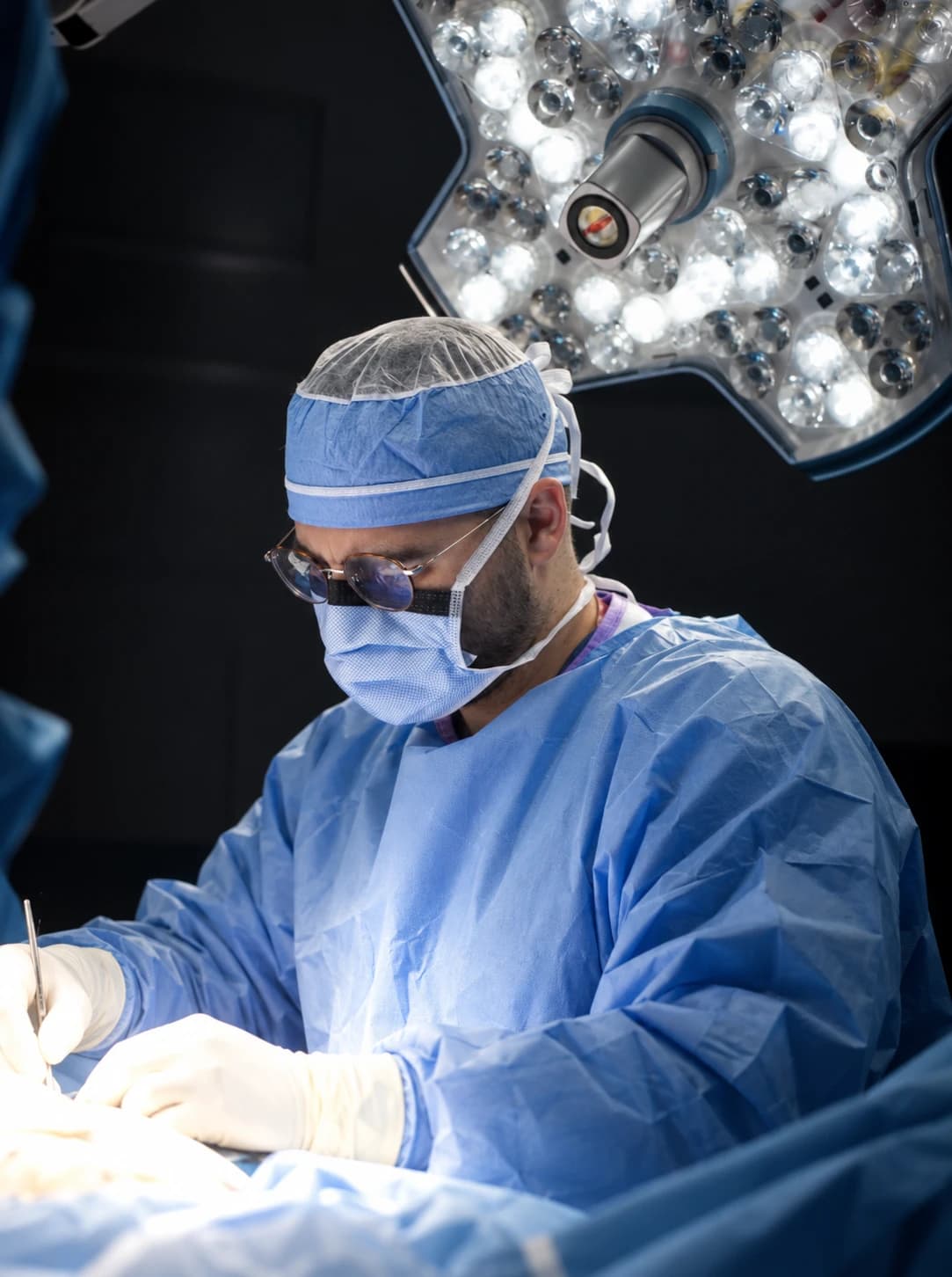
Reviewing surgeon
Foot and Ankle Surgeon at Limb Salvage Institute, a specialty practice of Ozturk Foot & Ankle. Dr. Ozturk is double board certified, as a Diplomate of the American Board of Podiatric Medicine (DABPM) and a Fellow of the Academy of Physicians in Wound Healing (FAPWH), and is a Fellow of the American Society of Podiatric Surgeons (FASPS) and the American Society of Podiatric Medicine (FASPM).
References
- 1.Fu XL, Ding H, Miao WW, Chen HL. Association Between Cigarette Smoking and Diabetic Foot Healing: A Systematic Review and Meta-Analysis. Int J Low Extrem Wounds. 2018:1534734618809583. PubMed 30461329 (external site)
- 2.Liu Z, Dumville JC, Hinchliffe RJ, et al. Negative pressure wound therapy for treating foot wounds in people with diabetes mellitus. Cochrane Database Syst Rev. 2018;10(10):CD010318. PubMed 30328611 (external site)
- 3.Sorensen LT, Karlsmark T, Gottrup F. Abstinence from smoking reduces incisional wound infection: a randomized controlled trial. Ann Surg. 2003;238(1):1-5. PubMed 12832959 (external site)
- 4.Thomsen T, Villebro N, Møller AM. Interventions for preoperative smoking cessation. Cochrane Database Syst Rev. 2014;2014(3):CD002294. PubMed 24671929 (external site)
- 5.Armstrong EJ, Wu J, Singh GD, et al. Smoking cessation is associated with decreased mortality and improved amputation-free survival among patients with symptomatic peripheral artery disease. J Vasc Surg. 2014;60(6):1565-71. PubMed 25282696 (external site)
- 6.American Cancer Society. Great American Smokeout. cancer.org (external site)
- 7.National Institute of Diabetes and Digestive and Kidney Diseases. Diabetes and Foot Problems. niddk.nih.gov (external site)
- 8.Luo Y, Liu C, Li C, Jin M, Pi L, Jin Z. The incidence of lower extremity amputation and its associated risk factors in patients with diabetic foot ulcers: A meta-analysis. Int Wound J. 2024;21(7):e14931. PubMed 38972836 (external site)
- 9.American Diabetes Association Professional Practice Committee for Diabetes. 12. Retinopathy, Neuropathy, and Foot Care: Standards of Care in Diabetes-2026. Diabetes Care. 2026;49(Suppl 1):S261-S276. PubMed 41358886 (external site)
- 10.Kim HK, Kim MS, Ahn S, et al. Smoking Behavior and Major Cardiovascular and Limb Events in Patients With Peripheral Artery Disease. JAMA Netw Open. 2026;9(8):e2629337. PubMed 42616502 (external site)
- 11.Sørensen LT. Wound healing and infection in surgery. The clinical impact of smoking and smoking cessation: a systematic review and meta-analysis. Arch Surg. 2012;147(4):373-83. PubMed 22508785 (external site)
- 12.Ramanujam CL, Stapleton JJ, Kilpadi KL, Rodriguez RH, Jeffries LC, Zgonis T. Split-thickness skin grafts for closure of diabetic foot and ankle wounds: a retrospective review of 83 patients. Foot Ankle Spec. 2010;3(5):231-40. PubMed 20631059 (external site)
- 13.Yammine K, Otayek J, Haikal E, et al. Analysis of systemic risk factors between diabetic/vascular patients having primary lower limb amputations and re-amputations. Vascular. 2024;32(6):1212-1219. PubMed 37552100 (external site)
- 14.Fiddes RA, McCaffrey N. Preoperative Smoking-Cessation Interventions to Prevent Postoperative Complications: A Quality Assessment and Overview of Systematic Review Evidence. Anesth Analg. 2025;140(6):1377-1387. PubMed 39466689 (external site)
- 15.Ashour O, Al-Huneidy L, Noordeen H. The implications of vaping on surgical wound healing: A systematic review. Surgery. 2023;173(6):1452-1462. PubMed 36997424 (external site)
This article is general health information and isn’t a substitute for advice from a clinician who knows your history. Read our medical disclaimer and how we review content.
Learn more about this
Condition
Peripheral artery disease
Narrowed leg arteries that starve a foot wound of blood, and the vascular procedures and foot surgery that aim to restore circulation, heal the wound and keep the foot.
Treatment
Restoring blood flow
Angioplasty, stents and bypass, performed by vascular specialists, restore blood flow to a foot wound that is starved of it; we test circulation, refer you and time foot surgery and wound care around the procedure.
Treatment
Limb salvage surgery
Operations that clear infection, remove infected bone, take pressure off ulcers, rebuild collapsed feet and close wounds, with the aim of saving the foot and keeping you walking.
Treatment
Preparing for surgery
How to get ready for limb salvage surgery: checking blood flow, working on blood sugar and medicines, quitting smoking, eating enough, planning around dialysis and setting up your home.
Treatment
Partial foot amputation
Surgery that removes only the part of the foot that can’t heal, from a single toe to the midfoot, keeping as much of the foot as is safe, to help you keep walking.
Treatment
Skin grafts and flaps
Closing a clean, slow-healing foot wound with a thin layer of your own skin, or with nearby skin moved across it.
Keep reading
Circulation & healing
Why Ankle Pressures Can Look Normal With Diabetes: Toe Pressures Explained
Calcified leg arteries can make ankle pressures look normal, or even high, when the foot is short of blood. Why toe pressures give a truer picture, and how the numbers shape wound care and surgery.
9 min read
Ulcers & offloading
Why a Foot Wound Deserves Prompt, Thorough Care
A painless sore on the foot can be more serious than it looks. What the research shows about waiting, what thorough wound care covers, and when surgery is the step that saves the foot.
8 min read
Limb salvage surgery
Transmetatarsal or Below-Knee Amputation? Why Saving Part of the Foot Matters
Keeping the heel and ankle can mean walking in a shoe instead of on an artificial leg, but a transmetatarsal amputation has to heal to pay off. What the studies show and what tips the choice.
8 min read
On the Ozturk Foot & Ankle blog
General foot care and non-surgical basics, from our parent practice.