Why a Foot Wound Deserves Prompt, Thorough Care
A painless sore on the foot can be more serious than it looks. What the research shows about waiting, what thorough wound care covers, and when surgery is the step that saves the foot.
Medically reviewed by Dr. Efe Ozturk · Last reviewed
Published 8 min read
A foot sore rarely looks dramatic. It may be small, hide under a callus or not hurt, so it seems sensible to cover it and wait. When diabetes has dulled the feeling in your feet, though, the missing pain is part of the problem: you can have a foot problem and feel nothing.[3] Here is why the first weeks matter, what thorough care involves, and when surgery is the step that protects the foot. For the condition itself, see our guide to diabetic foot ulcers.
Why foot wounds get seen late
A systematic review of 32 studies of foot ulcers and severe leg artery disease in high-income countries found that the median time from first symptoms to a specialist assessment ranged from 15 to 126 days.[4] The causes were familiar: warning signs that went unrecognized, early assessments that underestimated the problem, and difficulty reaching specialist care. Results varied between studies, but together they pointed to delays being linked with worse outcomes.[4]
The usual alarms are also quieter in a diabetic foot: redness, warmth and tenderness can be blunted by nerve damage or reduced blood flow, and fever is often absent in mild and moderate infections.[1] That matters because about 50% to 60% of diabetic foot ulcers become infected.[5]
What the research shows about time
Several studies have asked whether a wound that has been open longer, or reaches specialist care later, does worse. They point the same way.[6,7,8,9,2]
| Study | Who was studied | Main finding |
|---|---|---|
| Lavery et al. (2006) | 1,666 people with diabetes followed for two years | Wounds open longer than 30 days had 4.7 times the odds of becoming infected. |
| Margolis et al. (2002) | More than 31,000 people with nerve-related foot ulcers | Wound size, how long the wound had been open and its depth were each linked to the chance of healing by week 20. |
| Ince et al. (2007) | 154 people with 410 nerve-related ulcers, without infection or artery disease | Ulcers open longer before referral took longer to heal, and larger ulcers fared worse. |
| Smith-Strøm et al. (2017) | 105 people at two clinics in Norway | Referral 52 days or more after the ulcer appeared: a 58% lower rate of healing. |
| Meloni et al. (2021) | 200 people at a specialist foot center in Italy | Seen within the time limits: 89.9% healed. Seen late: 41.5% healed. |
Almost every foot infection in the two-year study began with a wound, and infection made a hospital stay and an amputation far more likely.[6] The Italian center set time limits by severity, from 24 hours for an abscess or wet gangrene to two weeks for a simple ulcer that wasn’t shrinking; of the 159 people seen within them, one needed an amputation above the ankle.[2]
There is a hopeful side. At the British clinic, ulcers had been open a median of 15 days when they were referred, and 86.6% had healed by a year; in all, 91.7% healed without any amputation.[8] Its authors concluded that new ulcers need early expert assessment.[8]
What these studies can’t tell us
They are observational, so they can’t prove that waiting alone caused the worse results. In the Italian study, the people seen late more often arrived with gangrene, poor blood flow and larger, deeper wounds.[2] In the review of delays, only four of the 32 studies defined what counted as a delay, and they didn’t agree.[4] What the studies do show is that wounds reaching specialist care late tend to be the harder ones to save.
What thorough care looks like at the first visit
Prompt is half of it; the other half is a careful assessment. The guideline asks for a standard check of six things: where the ulcer is, blood flow, sensation, infection, size and depth.[1] It advises X-rays when an ulcer is deeper than the skin, a tissue sample rather than a surface swab for an infected wound, and a search for the cause, such as a deformity, a bony prominence or your shoes.[1]
Your visits are with Dr. Efe Ozturk, a Foot and Ankle Surgeon board certified in wound care (FAPWH). We measure the wound, test sensation, do noninvasive circulation testing at our practice and take X-rays on site when needed. See how a foot wound is evaluated, and why toe pressures can tell more than ankle pressures.
Four things every healing plan has to cover
First-line care for a diabetic foot ulcer comes down to a short list: removing dead tissue, taking weight off the ulcer, treating poor blood flow and infection, and early referral for coordinated specialist care.[5] Even excellent local wound care can’t make up for an untreated infection, poor blood flow or continued pressure on the wound.[1]
Taking the pressure off. For a nerve-related ulcer on the sole, the preferred option is a knee-high device you can’t remove: a total contact cast, or a walker made non-removable by the clinician who fits it.[1] We fit the device and show you how to get around safely. See total contact casting and life in a total contact cast.
Clearing the wound. Callus and dead tissue are removed at the first visit or as soon as possible, and again as needed, except in an uninfected wound with severely reduced blood flow.[1] In a randomized trial, debridement every week and every second week healed similar shares of ulcers by 12 weeks (53% and 52%).[10] Our wound care visits are usually every week or two while a wound heals; see also wound debridement.
Treating infection. We take a tissue culture and choose antibiotics that match what grows. A deep or spreading infection needs an urgent surgical opinion, covered below.
Restoring blood flow. When an ulcer shows no sign of healing within 4–6 weeks despite good care, the guideline advises considering imaging of the leg arteries and a procedure to restore blood flow, even if earlier tests looked acceptable.[1] Vascular specialists do these procedures, and we coordinate with them; see restoring blood flow.
The four-week check
Measuring the wound at every visit shows early whether the plan is working. In a trial of 203 people seen weekly, ulcers that shrank more than the median in the first four weeks healed by week 12 in 58% of cases, compared with 9% of ulcers that shrank less.[11] Ulcers that went on to heal had shrunk by 82% on average at four weeks; those that didn’t, by 25%.[11]
A stalled wound is a signal to look again for pressure, infection and poor blood flow. If an uninfected ulcer still hasn’t healed after 4–6 weeks of good care, the guideline suggests considering added treatments such as placental membrane grafts, or hyperbaric oxygen for ulcers with poor blood flow.[1] We use skin substitutes for the wounds that need them and refer you for hyperbaric oxygen when it fits; see what the skin substitute trials show.
When surgery is the step that saves the foot
For a deep or spreading infection, the guideline calls for urgent evaluation for surgery to remove dead tissue, including infected bone, relieve pressure inside the foot and drain abscesses.[1] Among 106 people with a deep foot abscess, those operated on right away kept more of the foot than those who first spent a mean of about six days in another hospital without surgery; the more days before surgery, the higher the amputation level tended to be.[12] None of those operated on right away needed an amputation above the ankle.[12]
Surgery also helps an ulcer that pressure keeps reopening. When non-surgical offloading hasn’t healed an ulcer under the ball of the foot, the guideline suggests considering Achilles tendon lengthening or an operation on the metatarsal bone, combined with an offloading device.[1] Dr. Ozturk performs surgical offloading such as Achilles lengthening and metatarsal head resection, as well as draining infection, removing infected bone and correcting the deformities that cause ulcers. See surgery for diabetic foot infection, Achilles lengthening for forefoot ulcers and whether bone infection means amputation.
Every operation has risks, including wound-healing problems, and surgery works only inside the same plan of offloading, infection control and blood flow. The aim is the smallest operation that keeps you walking.
What to do if you have a wound now
- Look every day. Check both feet, including between the toes. A callus with dried blood inside it can be the first sign of a wound underneath.[3] Ozturk Foot & Ankle has a guide to the two-minute daily foot check (external site).
- Don’t wait for pain. A cut, blister or bruise that hasn’t started to heal after a few days needs a professional look.[3]
- Protect it. Cover it with a clean dressing and stay off it. Wash your feet but don’t soak them, which can leave the skin soft and soggy.[1] Don’t cut corns or calluses yourself or use corn plasters or liquid removers.[3]
- Book the visit. Call 908-215-5953 or book through Zocdoc. All three of our offices, in Lyndhurst, Paramus and Millburn, provide wound care.
Common questions
How soon should a foot wound be seen?
Within a day or two if it isn’t healing, especially with diabetes. The guideline’s standard is that an ulcer is assessed and treated immediately.[1] Spreading redness with fever, a cold or pale foot, or black tissue is an emergency.
My wound doesn’t hurt. Can it still be serious?
Yes. Nerve damage can hide pain from a foot problem,[3] and the signs of infection can be muted by neuropathy or poor circulation.[1]
How often will I need wound care visits?
Usually every week or two, sooner if anything changes. In a randomized trial, debridement every second week healed about as many ulcers as weekly debridement.[10]
If I come in early, will I avoid surgery?
Often. In the debridement trial, about half the ulcers healed within 12 weeks with regular debridement and an offloading boot.[10] When an operation is needed, early care lets it be planned at the right time, and for a deep infection, prompt surgery has been linked to saving more of the foot.[12]
The bottom line
A foot wound in someone with diabetes, numbness or poor circulation can be more serious than it looks, and earlier, more complete care goes with better healing and fewer amputations. Prompt means within a day or two. Thorough means checking blood flow, infection, depth and pressure, measuring progress, and moving to surgery when that is what keeps the foot healthy.
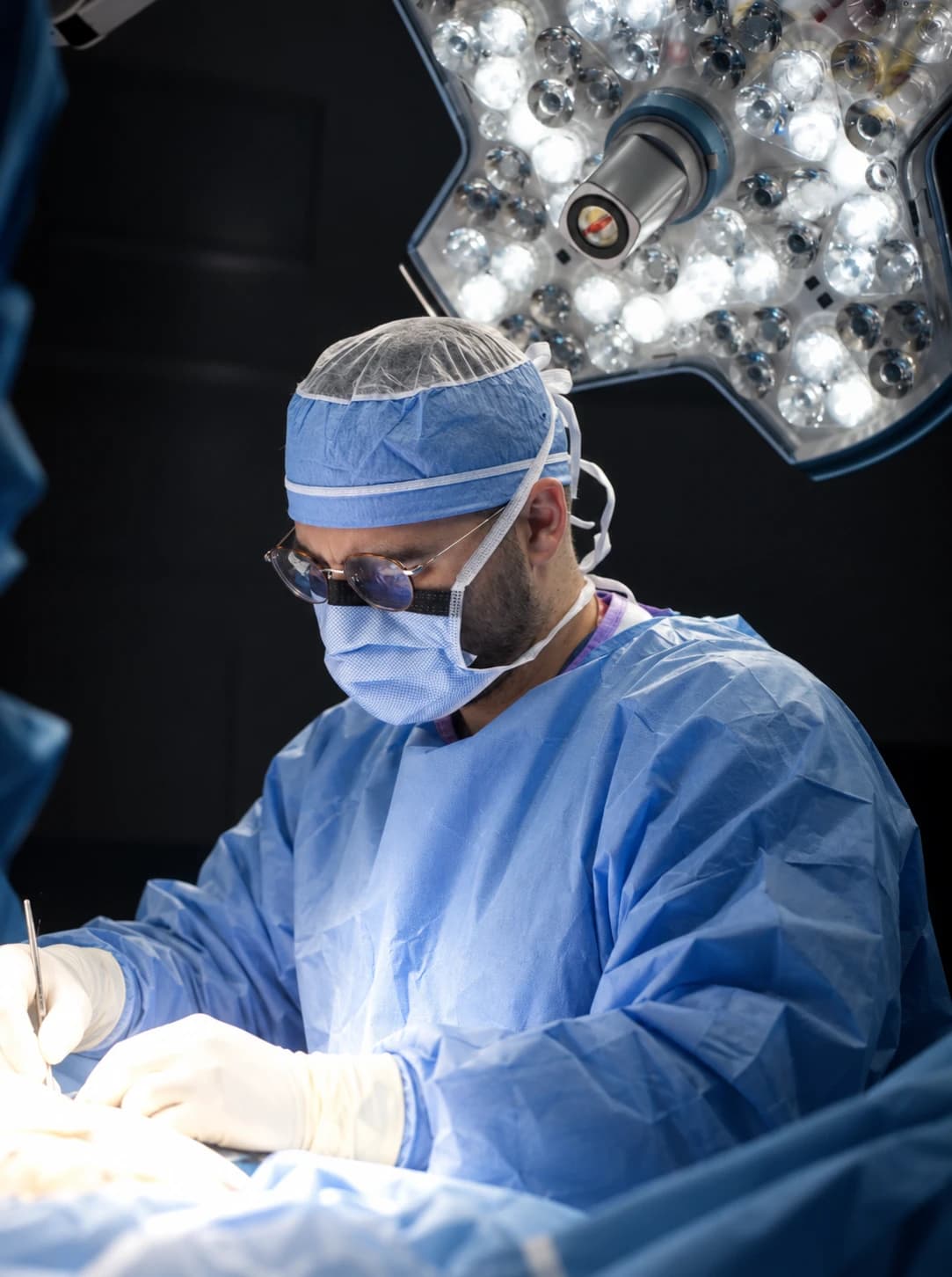
Reviewing surgeon
Foot and Ankle Surgeon at Limb Salvage Institute, a specialty practice of Ozturk Foot & Ankle. Dr. Ozturk is double board certified, as a Diplomate of the American Board of Podiatric Medicine (DABPM) and a Fellow of the Academy of Physicians in Wound Healing (FAPWH), and is a Fellow of the American Society of Podiatric Surgeons (FASPS) and the American Society of Podiatric Medicine (FASPM).
References
- 1.Schaper NC, van Netten JJ, Apelqvist J, Bus SA, Fitridge R, Game F, et al. Practical guidelines on the prevention and management of diabetes-related foot disease (IWGDF 2023 update). Diabetes Metab Res Rev. 2024;40(3):e3657. PubMed 37243927 (external site)
- 2.Meloni M, Lazaro-Martínez JL, Ahluwalia R, et al. Effectiveness of fast-track pathway for diabetic foot ulcerations. Acta Diabetol. 2021;58(10):1351-1358. PubMed 33942178 (external site)
- 3.National Institute of Diabetes and Digestive and Kidney Diseases. Diabetes and Foot Problems. niddk.nih.gov (external site)
- 4.Nickinson ATO, Bridgwood B, Houghton JSM, et al. A systematic review investigating the identification, causes, and outcomes of delays in the management of chronic limb-threatening ischemia and diabetic foot ulceration. J Vasc Surg. 2020;71(2):669-681.e2. PubMed 31676182 (external site)
- 5.Armstrong DG, Tan TW, Boulton AJM, et al. Diabetic Foot Ulcers: A Review. JAMA. 2023;330(1):62-75. PubMed 37395769 (external site)
- 6.Lavery LA, Armstrong DG, Wunderlich RP, et al. Risk factors for foot infections in individuals with diabetes. Diabetes Care. 2006;29(6):1288-93. PubMed 16732010 (external site)
- 7.Margolis DJ, Allen-Taylor L, Hoffstad O, et al. Diabetic neuropathic foot ulcers: the association of wound size, wound duration, and wound grade on healing. Diabetes Care. 2002;25(10):1835-9. PubMed 12351487 (external site)
- 8.Ince P, Game FL, Jeffcoate WJ. Rate of healing of neuropathic ulcers of the foot in diabetes and its relationship to ulcer duration and ulcer area. Diabetes Care. 2007;30(3):660-3. PubMed 17327337 (external site)
- 9.Smith-Strøm H, Iversen MM, Igland J, et al. Severity and duration of diabetic foot ulcer (DFU) before seeking care as predictors of healing time: A retrospective cohort study. PLoS One. 2017;12(5):e0177176. PubMed 28498862 (external site)
- 10.Nube VL, White JM, Brewer K, et al. A Randomized Trial Comparing Weekly With Every Second Week Sharp Debridement in People With Diabetes-Related Foot Ulcers Shows Similar Healing Outcomes: Potential Benefit to Resource Utilization. Diabetes Care. 2021;44(12):e203-e205. PubMed 34675055 (external site)
- 11.Sheehan P, Jones P, Caselli A, et al. Percent change in wound area of diabetic foot ulcers over a 4-week period is a robust predictor of complete healing in a 12-week prospective trial. Diabetes Care. 2003;26(6):1879-82. PubMed 12766127 (external site)
- 12.Faglia E, Clerici G, Caminiti M, et al. The role of early surgical debridement and revascularization in patients with diabetes and deep foot space abscess: retrospective review of 106 patients with diabetes. J Foot Ankle Surg. 2006;45(4):220-6. PubMed 16818148 (external site)
This article is general health information and isn’t a substitute for advice from a clinician who knows your history. Read our medical disclaimer and how we review content.
Learn more about this
Treatment
Wound care visits
What happens at a wound care visit, how often you’re seen, what you do at home, and when wound care steps up to surgery.
Condition
Diabetic foot ulcers
Open sores on the feet of people with diabetes, and the step-by-step care, including surgery when it’s needed, that aims to heal them and keep them closed.
Diagnosis guide
How wounds are evaluated
How a foot wound is evaluated, from the exam and measurements to the probe-to-bone test, cultures, X-rays, MRI, bone biopsy and circulation checks.
Treatment
Wound debridement
Removing callus and dead tissue from a foot wound, in the office or the operating room, so the wound can heal.
Treatment
Diabetic foot infection surgery
An operation that drains pus and removes dead and infected tissue from a diabetic foot infection, often in stages, before the wound is closed.
Keep reading
Ulcers & offloading
Life in a Total Contact Cast: What the First Weeks Are Like
A total contact cast stays on day and night for several weeks. What casting day, cast changes, showers, sleep, work and driving are like, and when to call us.
9 min read
Circulation & healing
Why Ankle Pressures Can Look Normal With Diabetes: Toe Pressures Explained
Calcified leg arteries can make ankle pressures look normal, or even high, when the foot is short of blood. Why toe pressures give a truer picture, and how the numbers shape wound care and surgery.
9 min read
Infection & bone
Does Osteomyelitis Mean Amputation? Bone Infection in the Foot
A bone infection in the foot is serious, but most people keep their leg. How it is treated, what the studies show, and when surgery is the step that saves the foot.
9 min read
On the Ozturk Foot & Ankle blog
General foot care and non-surgical basics, from our parent practice.