Venous Leg Ulcer Treatment: Compression First, Then the Vein Procedure That Speeds Healing
Compression heals most venous leg ulcers once the arteries allow it, and treating the leaky vein early healed ulcers weeks sooner in a large trial. The plan, step by step, and what keeps the ulcer closed.
Medically reviewed by Dr. Efe Ozturk · Last reviewed
Published 7 min read
A venous leg ulcer is an open sore on the lower leg caused by high pressure in leaky leg veins; our venous leg ulcers page explains why they form. This article is the treatment plan, step by step.
Step one: is it really a venous ulcer?
First, confirm the cause. Venous ulcers are usually shallow, with an irregular shape and clear edges. Varicose veins, swelling or red, itchy, scaly skin (venous dermatitis) may be nearby.[5]
The bigger question is the arteries, which bring fresh blood down to the foot. In a specialist clinic that saw 1,416 ulcerated legs with leaky veins, about 1 in 6 also had reduced artery flow: 13.6% moderate and 2.2% severe.[1]
That matters because compression squeezes the leg. The ankle-brachial index compares blood pressure at your ankle with your arm, and it shows how much squeeze the leg can safely take. We do this noninvasive circulation testing at our practice; see circulation tests for foot wounds.
Why is compression unsafe with poor arterial flow?
Too much squeeze can harm a leg with poor arterial flow: in a study of mixed artery and vein ulcers, bandage pressures above 41 mm Hg lowered blood flow at the big toe.[6] So the strength of compression is matched to the arteries. In one specialist clinic’s plan:[1]
- Index above 0.85: full multilayer compression bandaging.
- Index above 0.5, up to 0.85: lighter, supervised compression, with a referral to restore blood flow if the ulcer doesn’t heal.
- Index 0.5 or less: considered for a procedure to restore blood flow first.
Compression can still help a mixed ulcer. In that study of 25 people, with an index above 0.5 and an ankle pressure above 60 mm Hg, non-stretch bandages up to 40 mm Hg did not reduce arterial flow and improved the calf’s pumping of blood out of the leg.[6]
In that specialist clinic, 87% of ulcers in legs without significant artery disease healed by 36 weeks, against 68% with moderate and 53% with severe artery disease.[1] When blood flow needs restoring, a vascular specialist does it; see restoring blood flow.
How does compression heal a venous leg ulcer?
Once the arteries allow it, compression is the base of every plan. A 2021 Cochrane review pooled 14 trials of 1,391 people. Ulcers probably healed faster with compression bandages or stockings than without, and people in compression were about 1.8 times as likely to be fully healed within a year. Compression probably lowered leg ulcer pain, too.[7]
Compression treats the pressure but not the leaky vein causing it.[2] That is where a procedure comes in.
The procedure that speeds healing: treating the vein early
Endovenous ablation closes the faulty surface vein from the inside. The EVRA trial tested when to do it. At 20 centers in the United Kingdom, 450 people with a venous ulcer less than 6 months old and a leaky surface vein all wore compression. Half had ablation within 2 weeks; for the rest, it waited until the ulcer healed or 6 months passed.[2]
Early ablation healed ulcers faster (median 56 against 82 days), healed more of them by 24 weeks (85.6% against 76.3%) and gave more ulcer-free days in the first year (306 against 278).[2]
The lesson is timing: the benefit came from not waiting. A vascular or vein specialist performs the ablation. We arrange the vein ultrasound (duplex scan) that looks for the leaky vein, refer you early when one is found, and keep up your compression and wound care while the vein is treated.
Will the ulcer come back?
Staying healed is the second goal, and treating the vein helps here, too.
- In the long-term EVRA follow-up, ulcers came back at a rate of 0.11 per person per year after early ablation, against 0.16 after deferred ablation.[3]
- In the earlier ESCHAR trial of 500 people, adding vein surgery to compression didn’t change healing at 24 weeks (65% in both groups). But at 12 months, ulcers had come back in 12% of the surgery group against 28% with compression alone.[8]
After healing, the people in ESCHAR moved from bandages to below-knee compression stockings.[8] Stockings and a treated vein work together.
When an ulcer stalls: debridement and skin grafts
Some ulcers are harder. Signs that healing may be slow include an ulcer open longer than 3 months, one 10 centimeters (about 4 inches) or longer, artery disease, older age and a higher body weight. For ulcers that are large, long-lasting or not responding to care, a referral to a wound specialist should be considered.[5]
- Debridement means removing dead tissue and crust from the wound so healthy tissue can grow. We do it in the office when the wound needs it; see wound debridement.
- Skin grafts and skin substitutes. In a Cochrane review of 17 trials, most of which also used compression, bilayer artificial skin healed more venous ulcers than a plain dressing.[4] For the wounds that need them, we offer skin substitutes and skin grafts, always with compression.
Dr. Efe Ozturk, a Foot and Ankle Surgeon who is double board certified, including in wound care (FAPWH), provides this care and coordinates vein and artery procedures with the specialists who perform them.
Limits of the evidence
EVRA included only ulcers under 6 months old with a leaky surface vein, and its most common problems after ablation were pain and a blood clot in a deep vein. The time until a first recurrence wasn’t clearly different between groups.[2,3] Most compression trials were small, and 10 of 14 were at high risk of bias.[7] The mixed-ulcer findings come from one clinic and a 25-person study.[1,6] No randomized trial in the Cochrane debridement review tested surgical or sharp debridement,[9] and evidence for graft types other than bilayer artificial skin was too thin to judge.[4]
Common questions
How do you heal a venous leg ulcer?
Check the arteries, wear compression matched to them, and ask early about a vein scan and ablation, which healed ulcers faster in EVRA.[2] If the ulcer stalls, debridement and a graft or skin substitute are the next steps.
Can venous leg ulcers heal on their own?
Some do, but compression makes a big difference. In the Cochrane review, people in compression were about 1.8 times as likely to be fully healed within a year as people without it.[7]
Can venous leg ulcers be healed for good?
Most can be healed, but they often return. In the long-term EVRA follow-up, 28.4% of people whose ulcer healed had at least one recurrence.[3] Treating the leaky vein lowered recurrence in both EVRA and ESCHAR.[3,8]
Which venous leg ulcer treatment has the strongest evidence?
There is no single answer, but the strongest evidence supports compression plus early treatment of a leaky surface vein.[7,2]
The bottom line
Most venous leg ulcers heal with the right plan. Get your arteries checked, wear compression that fits them, and don’t wait months to treat the vein: early ablation healed ulcers weeks sooner, and fewer came back. If yours has been open a while, ask about debridement and grafting. Ozturk Foot & Ankle lists our offices under wound care.
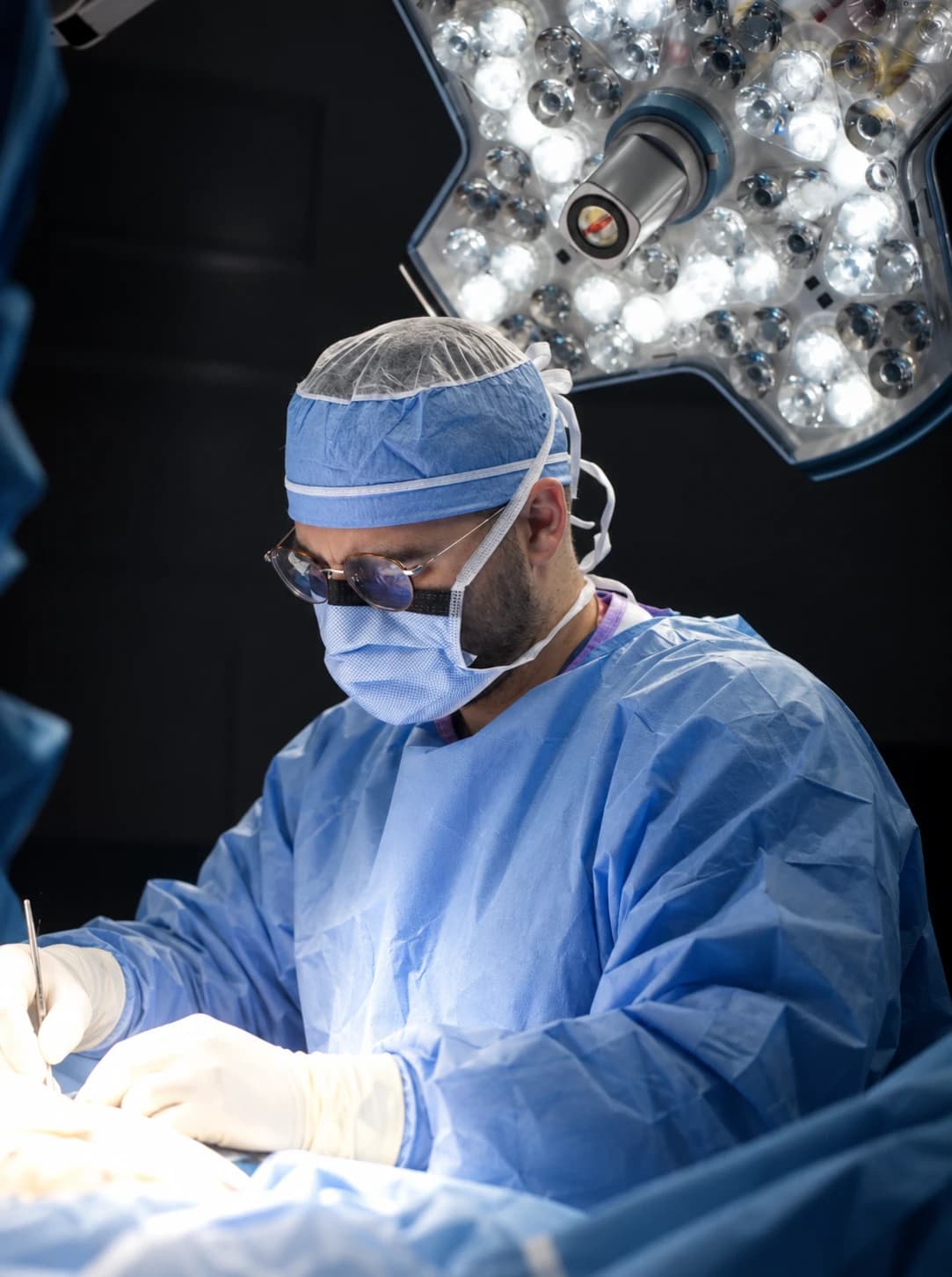
Reviewing surgeon
Foot and Ankle Surgeon at Limb Salvage Institute, a specialty practice of Ozturk Foot & Ankle. Dr. Ozturk is double board certified, as a Diplomate of the American Board of Podiatric Medicine (DABPM) and a Fellow of the Academy of Physicians in Wound Healing (FAPWH), and is a Fellow of the American Society of Podiatric Surgeons (FASPS) and the American Society of Podiatric Medicine (FASPM).
References
- 1.Humphreys ML, Stewart AH, Gohel MS, Taylor M, Whyman MR, Poskitt KR. Management of mixed arterial and venous leg ulcers. Br J Surg. 2007;94(9):1104-7. PubMed 17497654 (external site)
- 2.Gohel MS, Heatley F, Liu X, et al. A Randomized Trial of Early Endovenous Ablation in Venous Ulceration. N Engl J Med. 2018;378(22):2105-2114. PubMed 29688123 (external site)
- 3.Gohel MS, Mora J, Szigeti M, et al. Long-term Clinical and Cost-effectiveness of Early Endovenous Ablation in Venous Ulceration: A Randomized Clinical Trial. JAMA Surg. 2020;155(12):1113-1121. PubMed 32965493 (external site)
- 4.Jones JE, Nelson EA, Al-Hity A. Skin grafting for venous leg ulcers. Cochrane Database Syst Rev. 2013;2013(1):CD001737. PubMed 23440784 (external site)
- 5.Bonkemeyer Millan S, Gan R, Townsend PE. Venous Ulcers: Diagnosis and Treatment. Am Fam Physician. 2019;100(5):298-305. PubMed 31478635 (external site)
- 6.Mosti G, Iabichella ML, Partsch H. Compression therapy in mixed ulcers increases venous output and arterial perfusion. J Vasc Surg. 2012;55(1):122-8. PubMed 21944912 (external site)
- 7.Shi C, Dumville JC, Cullum N, Connaughton E, Norman G. Compression bandages or stockings versus no compression for treating venous leg ulcers. Cochrane Database Syst Rev. 2021;7(7):CD013397. PubMed 34308565 (external site)
- 8.Barwell JR, Davies CE, Deacon J, et al. Comparison of surgery and compression with compression alone in chronic venous ulceration (ESCHAR study): randomised controlled trial. Lancet. 2004;363(9424):1854-9. PubMed 15183623 (external site)
- 9.Gethin G, Cowman S, Kolbach DN. Debridement for venous leg ulcers. Cochrane Database Syst Rev. 2015;2015(9):CD008599. PubMed 26368002 (external site)
This article is general health information and isn’t a substitute for advice from a clinician who knows your history. Read our medical disclaimer and how we review content.
Learn more about this
Condition
Venous leg ulcers
Open sores on the lower leg, commonly near the inner ankle, caused by high pressure in leaky or blocked leg veins.
Diagnosis guide
Circulation tests
How ankle and toe pressures, Doppler waveforms, TcPO2 and artery imaging measure blood flow to a foot wound, and how the results guide healing, surgery and vascular referral.
Treatment
Wound debridement
Removing callus and dead tissue from a foot wound, in the office or the operating room, so the wound can heal.
Treatment
Skin substitutes
Thin sheets of bioengineered, donor or animal tissue, or placental membrane, placed on a stalled wound on top of good wound care to help it close.
Treatment
Skin grafts and flaps
Closing a clean, slow-healing foot wound with a thin layer of your own skin, or with nearby skin moved across it.
Treatment
Restoring blood flow
Angioplasty, stents and bypass, performed by vascular specialists, restore blood flow to a foot wound that is starved of it; we test circulation, refer you and time foot surgery and wound care around the procedure.
Keep reading
Ulcers & offloading
Skin Substitutes for Diabetic Foot Ulcers: What the Trials Show
Do skin substitutes work for diabetic foot ulcers? In trials, they help more stalled ulcers close. What the evidence shows, what it leaves out, and when surgery is the more direct fix.
8 min read
Circulation & healing
Why Ankle Pressures Can Look Normal With Diabetes: Toe Pressures Explained
Calcified leg arteries can make ankle pressures look normal, or even high, when the foot is short of blood. Why toe pressures give a truer picture, and how the numbers shape wound care and surgery.
9 min read
Ulcers & offloading
Why a Foot Wound Deserves Prompt, Thorough Care
A painless sore on the foot can be more serious than it looks. What the research shows about waiting, what thorough wound care covers, and when surgery is the step that saves the foot.
8 min read
On the Ozturk Foot & Ankle blog
General foot care and non-surgical basics, from our parent practice.