What Is a Wound VAC and How Does It Work After Foot Surgery?
A wound VAC is a sealed foam dressing on a small suction pump. On the foot it works best after surgery, as a bridge to closing the wound or holding a skin graft.
Medically reviewed by Dr. Efe Ozturk · Last reviewed
Published 7 min read
Being told you’ll go home with a pump attached to your foot can feel like a setback. It usually isn’t one. In the foot, a wound VAC is mostly used after an operation has done the hard part, to help the wound that surgery left behind heal sooner. Here is what it is, how it works, what the trials show, and what living with one is like.
What is a wound VAC and how does it work?
VAC stands for vacuum-assisted closure. A wound VAC has three parts:
- A foam dressing cut to fit inside the wound. It is usually black polyurethane or white polyvinyl alcohol foam.[1]
- A clear, airtight film that seals the foam in place.
- A tube and pump. The pump applies suction, either nonstop or in cycles, at pressures up to 125 mm Hg (a unit of pressure).[1] Wound fluid is pulled away into a canister.[3]
That steady pull reduces swelling and encourages granulation tissue, the red, grainy tissue that fills a wound from the bottom up.[1] The dressing can be put on in the operating room, at the bedside or in an exam room, and small battery-powered or disposable units are made for smaller wounds in people who are up and about.[1]
Why is a wound VAC a surgical tool?
A VAC can’t clear infection or dead tissue on its own. The diabetic foot infection guideline suggests not using it, with or without rinsing, to treat the infection itself, and it advises considering surgery within 24 to 48 hours to remove infected and dead tissue in moderate and severe infections.[4] So the order is: surgery first, then the VAC.
Surgery that saves a foot can leave a large wound open on purpose, after draining an abscess, removing infected bone or performing a toe, ray or transmetatarsal amputation (removing part of the forefoot). That wound needs a healthy bed before it can be closed or covered with a skin graft, and that is where suction helps.
What the trials show
- After partial foot amputation. At 18 US centers, 162 people with diabetes and amputation wounds up to the transmetatarsal level, with adequate blood flow, were randomly assigned to suction or standard moist dressings. With suction, 56% of wounds healed, against 39%. Wounds closed faster, and granulation tissue formed faster.[5] A Cochrane review calculated that median healing time in this trial was 21 days shorter with suction.[3]
- Diabetic foot ulcers. In a trial of 335 people, 43.2% of ulcers closed within 112 days with suction, against 28.9% with advanced moist dressings, and fewer people needed a later amputation.[6] A 2026 review of 19 studies (2,046 patients) found suction made complete healing about 1.4 times as likely.[7]
- Holding a skin graft. Across 12 studies of 653 people with split-thickness skin grafts (thin layers of skin), suction over a fresh graft raised the share of graft that took and cut repeat operations by about 72%.[8]
Dr. Efe Ozturk is a Foot and Ankle Surgeon, double board certified, including in wound care (FAPWH). He drains infection, removes dead tissue and infected bone, performs toe and partial foot amputations, and closes wounds with skin grafts or local flaps. He uses a wound VAC for the wounds that need it. See negative pressure wound therapy, toe and partial foot amputation and skin grafts and flaps.
What is a VeraFlo wound VAC?
VeraFlo is one brand of wound VAC that adds instillation and a dwell time: a rinsing solution, such as saline, is put into the wound and left to sit for a set time (the “dwell”) before suction resumes.[9,1] In a review of 13 studies (871 patients) of orthopedic and plastic surgery wounds, instillation was linked with more wounds closing and fewer complications than standard suction or ordinary dressings, though not with fewer operations.[10] In a randomized study of 100 people with infected wounds that needed surgical cleaning, plain saline appeared to work as well as an antiseptic rinse.[11] Instillation is still an add-on to surgery, not a replacement for it.[4]
What is it like to live with a wound VAC?
- At home. Much of the treatment happens at home. In the large ulcer trial, about 9 in 10 days of suction therapy were home-care days.[6] The FDA advises that you and your caregiver are taught how the system works, which problems to watch for and what to do if one happens.[12]
- Dressing changes. In the amputation trial, dressings were changed every 48 hours.[5]
- Daily life. The pump goes everywhere with you. A review of patient experiences found it can limit daily routines and social life and cause worry, though some people reported a better quality of life.[13]
| Question | What the evidence says |
|---|---|
| What it does | Gentle suction that removes fluid, eases swelling and builds new tissue |
| Where it is mainly used | Open wounds after foot surgery, and holding a fresh skin graft |
| What must come first | Surgery to remove infected and dead tissue |
| Can it be used at home? | Yes, with training; most therapy days in one trial were at home |
What are the limits of a wound VAC?
Not every trial found a benefit. A German trial in everyday practice found no significant difference in how many diabetic foot wounds closed or how fast, and more people had at least one medical problem with suction (96 vs 72), though only 16 problems were related to it.[14] A 2026 UK trial of 686 people with open surgical wounds, 80% of them on the foot, found median healing took 187 days with suction and 195 days without, no clear difference, at a higher cost.[15] The guideline rates the overall evidence as low certainty.[2] The FDA has reported rare but serious bleeding, especially in people with blood vessel grafts, infected wounds or blood thinners, and when dressings stuck to tissue are removed.[12] Tell us about every blood thinner you take.
Common questions
What is a wound VAC used for?
On the foot, mainly for open wounds after surgery: after an infection is drained, infected bone is removed or part of the foot is amputated, and to hold a skin graft in place while it takes.[2,8] See surgery for diabetic foot infection.
Can a wound VAC be done at home?
Yes. Most people go home with a portable pump, and in one trial about 9 in 10 therapy days were at home.[6] You’ll be shown how the alarms work and whom to call.[12]
Do wound VACs hurt?
Dressing changes can be uncomfortable, and the type of dressing used makes a real difference to pain.[13] In the UK trial, wound pain scores were no different with suction than with usual dressings.[15] Tell us if a change hurts, so we can adjust the plan.
Can a wound VAC cause infection?
In the amputation trial, side effects (most often wound infection) were about as frequent with suction as with dressings.[5] In the ulcer trial, infection, skin infection and bone infection rates at 6 months did not differ significantly.[6] FDA reports tied most VAC-related infections to pieces of dressing left in the wound, one reason dressings are counted at each change.[12]
The bottom line
A wound VAC is gentle suction that helps an open wound fill in. On the foot, it belongs after surgery has removed what can’t heal, as a bridge to closing the wound or holding a graft. If you have a deep or stalled foot wound, see a surgeon early, so the operation and the VAC can work together. Ozturk Foot & Ankle explains its approach to wound care.
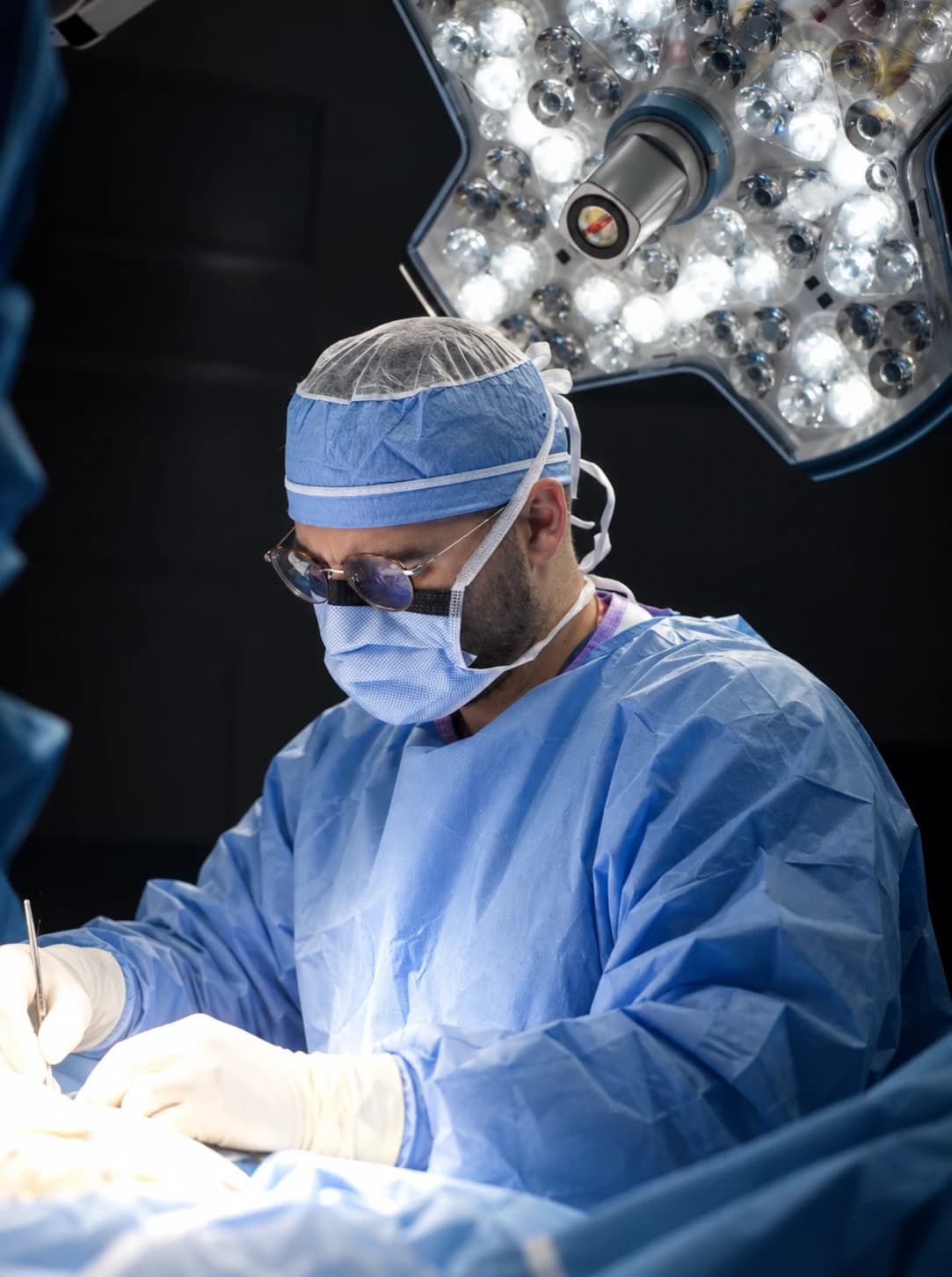
Reviewing surgeon
Foot and Ankle Surgeon at Limb Salvage Institute, a specialty practice of Ozturk Foot & Ankle. Dr. Ozturk is double board certified, as a Diplomate of the American Board of Podiatric Medicine (DABPM) and a Fellow of the Academy of Physicians in Wound Healing (FAPWH), and is a Fellow of the American Society of Podiatric Surgeons (FASPS) and the American Society of Podiatric Medicine (FASPM).
References
- 1.Zaver V, Marietta M, Kankanalu P. Negative Pressure Wound Therapy. In: StatPearls. StatPearls Publishing; updated 2026. PubMed 35015413 (external site)
- 2.Chen P, Vilorio NC, Dhatariya K, Jeffcoate W, Lobmann R, McIntosh C, et al. Guidelines on interventions to enhance healing of foot ulcers in people with diabetes (IWGDF 2023 update). Diabetes Metab Res Rev. 2024;40(3):e3644. PubMed 37232034 (external site)
- 3.Liu Z, Dumville JC, Hinchliffe RJ, et al. Negative pressure wound therapy for treating foot wounds in people with diabetes mellitus. Cochrane Database Syst Rev. 2018;10(10):CD010318. PubMed 30328611 (external site)
- 4.Senneville É, Albalawi Z, van Asten SA, Abbas ZG, Allison G, Aragón-Sánchez J, et al. IWGDF/IDSA guidelines on the diagnosis and treatment of diabetes-related foot infections (IWGDF/IDSA 2023). Diabetes Metab Res Rev. 2024;40(3):e3687. PubMed 37779323 (external site)
- 5.Armstrong DG, Lavery LA; Diabetic Foot Study Consortium. Negative pressure wound therapy after partial diabetic foot amputation: a multicentre, randomised controlled trial. Lancet. 2005;366(9498):1704-10. PubMed 16291063 (external site)
- 6.Blume PA, Walters J, Payne W, Ayala J, Lantis J. Comparison of negative pressure wound therapy using vacuum-assisted closure with advanced moist wound therapy in the treatment of diabetic foot ulcers: a multicenter randomized controlled trial. Diabetes Care. 2008;31(4):631-6. PubMed 18162494 (external site)
- 7.Niu C, Fu K, Chen X, Wang Y. Negative pressure wound therapy versus standard wound care for diabetic foot ulcers: a systematic review and meta-analysis of healing and limb outcomes. Front Endocrinol (Lausanne). 2026;17:1850122. PubMed 42741115 (external site)
- 8.Yin Y, Zhang R, Li S, Guo J, Hou Z, Zhang Y. Negative-pressure therapy versus conventional therapy on split-thickness skin graft: A systematic review and meta-analysis. Int J Surg. 2018;50:43-48. PubMed 29292216 (external site)
- 9.Diehm YF, Loew J, Will PA, et al. Negative pressure wound therapy with instillation and dwell time (NPWTi-d) with V.A.C. VeraFlo in traumatic, surgical, and chronic wounds: a helpful tool for decontamination and to prepare successful reconstruction. Int Wound J. 2020;17(6):1740-1749. PubMed 32716140 (external site)
- 10.De Pellegrin L, Feltri P, Filardo G, et al. Effects of negative pressure wound therapy with instillation and dwell time (NPWTi-d) versus NPWT or standard of care in orthoplastic surgery: A systematic review and meta-analysis. Int Wound J. 2023;20(6):2402-2413. PubMed 36594491 (external site)
- 11.Kim PJ, Attinger CE, Oliver N, et al. Comparison of Outcomes for Normal Saline and an Antiseptic Solution for Negative-Pressure Wound Therapy with Instillation. Plast Reconstr Surg. 2015;136(5):657e-664e. PubMed 26505723 (external site)
- 12.U.S. Food and Drug Administration. UPDATE on Serious Complications Associated with Negative Pressure Wound Therapy Systems: FDA Safety Communication. Issued February 24, 2011. web.archive.org (external site)
- 13.Upton D, Stephens D, Andrews A. Patients' experiences of negative pressure wound therapy for the treatment of wounds: a review. J Wound Care. 2013;22(1):34-9. PubMed 23299356 (external site)
- 14.Seidel D, Storck M, Lawall H, et al. Negative pressure wound therapy compared with standard moist wound care on diabetic foot ulcers in real-life clinical practice: results of the German DiaFu-RCT. BMJ Open. 2020;10(3):e026345. PubMed 32209619 (external site)
- 15.Arundel C, Mandefield L, Fairhurst C, et al. Clinical and cost-effectiveness of negative pressure wound therapy versus usual care for surgical wounds healing by secondary intention: the SWHSI-2 pragmatic RCT. Health Technol Assess. 2026;30(32):1-50. PubMed 42104753 (external site)
This article is general health information and isn’t a substitute for advice from a clinician who knows your history. Read our medical disclaimer and how we review content.
Learn more about this
Treatment
Wound VAC therapy
Gentle suction through a sealed foam dressing that can help a wound left open after foot surgery fill in and get ready to close.
Treatment
Partial foot amputation
Surgery that removes only the part of the foot that can’t heal, from a single toe to the midfoot, keeping as much of the foot as is safe, to help you keep walking.
Treatment
Skin grafts and flaps
Closing a clean, slow-healing foot wound with a thin layer of your own skin, or with nearby skin moved across it.
Treatment
Diabetic foot infection surgery
An operation that drains pus and removes dead and infected tissue from a diabetic foot infection, often in stages, before the wound is closed.
Treatment
Wound debridement
Removing callus and dead tissue from a foot wound, in the office or the operating room, so the wound can heal.
Keep reading
Ulcers & offloading
Skin Substitutes for Diabetic Foot Ulcers: What the Trials Show
Do skin substitutes work for diabetic foot ulcers? In trials, they help more stalled ulcers close. What the evidence shows, what it leaves out, and when surgery is the more direct fix.
8 min read
Limb salvage surgery
Transmetatarsal or Below-Knee Amputation? Why Saving Part of the Foot Matters
Keeping the heel and ankle can mean walking in a shoe instead of on an artificial leg, but a transmetatarsal amputation has to heal to pay off. What the studies show and what tips the choice.
8 min read
Ulcers & offloading
Why Diabetic Foot Ulcers Don’t Heal: The Five Usual Reasons and What Fixes Each
A stalled ulcer usually has a cause a dressing can’t reach, and four of the five usual causes have a surgical or procedural answer. How each is found, what fixes it, and when surgery closes the wound.
7 min read
Limb salvage surgery
Can Gangrene Toes Be Saved? What Decides How Much of the Foot Stays
Dead tissue can’t come back, but restoring blood flow and prompt, precise surgery can protect the rest of the foot. When to go to the emergency room, and how a surgeon chooses the level.
8 min read
On the Ozturk Foot & Ankle blog
General foot care and non-surgical basics, from our parent practice.