Does Osteomyelitis Mean Amputation? Bone Infection in the Foot
A bone infection in the foot is serious, but most people keep their leg. How it is treated, what the studies show, and when surgery is the step that saves the foot.
Medically reviewed by Dr. Efe Ozturk · Last reviewed
Published 9 min read
Hearing “bone infection” after weeks of caring for a foot wound is worrying, and many people assume amputation comes next. For most people, it doesn’t. Here is how the infection is found and treated, and when surgery is the step that protects the foot. Our pages on bone infection of the foot and surgery for bone infection have the full medical detail.
How a wound reaches the bone
In people with diabetes, foot bone infection usually starts at an open sore, with germs spreading from the ulcer into the bone beneath it.[1] Nerve damage and poor circulation can hide the usual signs of infection, such as redness, warmth and pain, so a wound can deepen quietly.[1]
In a study that followed 1,666 people with diabetes for about 27 months, one in five of the 151 foot infections (19.9%) involved bone, and a wound that reached bone or joint raised the risk about 23-fold.[4]
So a deep, slow or recurring wound deserves attention early; see why early wound care matters.
How it is confirmed
No single test settles it, so the international guideline suggests combining a probe-to-bone test, X-rays and a blood test for inflammation, and recommends MRI when doubt remains.[1]
- Probe to bone. A sterile, blunt probe is passed gently into the wound; touching hard, gritty bone is a positive test. Across seven studies, it detected 87% of bone infections and correctly cleared 83% of wounds without one.[5]
- X-rays and MRI. We take X-rays at the practice and arrange MRI at an outside imaging center when needed. Early bone changes can be missed on X-ray, so a normal film may be repeated in 2–3 weeks.[1]
- A bone sample. Testing the bone itself is the accepted standard for diagnosis and the only definitive way to identify the germ.[1] It can change the outcome: in a French study of 50 people treated without surgery, antibiotics chosen from a bone culture were the only factor linked with remission.[6] Dr. Efe Ozturk performs bone biopsies when the result will guide treatment; see how a foot wound is evaluated.
Three ways to treat it
Every plan rests on antibiotics chosen from culture results, regular wound care and a check of blood flow. Beyond that foundation, there are three main paths.[1]
| Path | When it may fit | What it involves |
|---|---|---|
| Antibiotics without surgery | Forefoot infection with no exposed bone, abscess or artery disease | About 6 weeks of antibiotics, often by mouth, with wound care |
| Bone-sparing surgery | Exposed bone, an abscess, or infection that isn’t settling | Removing only the infected bone, then a shorter antibiotic course |
| Toe or partial foot amputation | Limb-threatening infection, extensive dead tissue, or treatment that hasn’t worked | Removing the least needed to heal, keeping as much foot as possible |
The 2023 IWGDF/IDSA guideline suggests considering surgery to remove infected bone, with antibiotics, for foot bone infection in general, and antibiotics alone for a narrower group: a forefoot infection with no need for urgent drainage, no artery disease and no exposed bone.[1] Both suggestions are conditional and rest on low-certainty evidence, so the choice is made person by person.[1]
What the studies show
- A randomized trial. In people with a forefoot bone infection under a neuropathic ulcer and good circulation, 86% healed after bone-sparing surgery plus 10 days of antibiotics and 75% after 90 days of antibiotics alone, not a statistically significant difference. Four of the 24 people given antibiotics alone worsened and had surgery; minor amputations did not differ between the groups.[7]
- A large clinic series. At a UK specialist center, 34 of 147 people (23%) had surgery because the infection threatened life or limb or wasn’t responding, mostly minor amputations. Of the 113 first treated without surgery, 82.3% reached apparent remission with antibiotics alone.[3]
- How long antibiotics need to run. In a randomized trial of 40 people treated without surgery, remission came in 12 of 20 after 6 weeks of antibiotics and 14 of 20 after 12 weeks, not a significant difference. Remission meant a healed wound, no return of infection and no bone surgery or amputation over at least a year.[8]
- The case for operating. An older US study of 237 adults with foot or toe bone infection linked surgical debridement with better healing, and linked antibiotics alone with poorer healing and limb salvage.[9]
Why the difference? The studies favoring antibiotics alone mostly left out people with artery disease and those who obviously needed an operation, such as for exposed bone or an undrained abscess. People who also had soft-tissue infection tended to need more urgent and extensive surgery and did worse.[1]
When surgery is the step that saves the foot
Surgery is not a last resort here. Removing infected bone has long been the standard treatment for osteomyelitis,[1] and for moderate and severe foot infections the guideline suggests considering surgery early, within 24–48 hours, to remove infected and dead tissue.[1] Speed matters: among 112 people in hospital with a diabetic foot infection, 27.6% of those not operated on in the first 3 days later needed an amputation above the ankle, against 13% of those operated on promptly.[10]
What an operation adds:
- It removes only what is infected. Bone-sparing operations take out part of a toe bone, an infected joint surface, a sesamoid or a metatarsal head, and releasing a toe’s flexor tendon through a tiny cut belongs to the same toolkit (see flexor tenotomy for toe ulcers).[11] A review judged these operations, when indicated, safe and effective, improving the chance of healing and lowering the risk of limb loss compared with more radical amputation.[11]
- It shortens antibiotics. In a randomized pilot trial of 93 people after surgical debridement of a foot bone infection, remission came in 84% with 3 weeks of antibiotics and 73% with 6 weeks (not a significant difference), and side effects were similar.[12]
For the infections that need it, Dr. Ozturk, a Foot and Ankle Surgeon who is board certified in wound care (FAPWH), removes infected bone, choosing the smallest operation that clears it. See also surgery for diabetic foot infection.
When a smaller amputation is the right choice
Sometimes a toe or part of the foot is too damaged to keep. A planned toe, ray or transmetatarsal amputation that removes only what can’t heal is still limb preservation: you keep walking on your own foot. In the UK series, 28 of the 34 operations were minor amputations.[3] Dr. Ozturk performs toe and partial foot amputations for the wounds that need them; a below-knee amputation, if it is ever needed, is performed by a vascular or orthopedic surgeon. See toe and partial foot amputation and our post on transmetatarsal or below-knee amputation.
Blood flow shapes these decisions. When artery disease and infection occur together, the guideline calls for urgent input from both a surgical and a vascular specialist to plan drainage and any procedure to restore blood flow.[1] We start with noninvasive circulation testing at our practice and work with vascular specialists who restore blood flow; our post on toe pressures explains how flow is measured. Told you need an amputation? A limb salvage second opinion can show whether a smaller operation is possible.
Limits and risks
The evidence is thin. A systematic review found only six trials comparing medical and surgical treatment (308 people, two trials at low risk of bias) and concluded that they cannot yet show which approach is preferable.[13] The review of bone-sparing surgery also calls for randomized trials.[11]
Neither path is free of downsides. Stomach and bowel side effects affected 45% of people on 12 weeks of antibiotics and 15% on 6 weeks.[8] Surgery can mean a second operation, as it did for 3 of the 22 people in the trial’s surgery group.[7] And if blood flow is poorer than tests suggest, an operation can leave a wound that won’t heal, one reason circulation is checked first.[1]
Keeping it from coming back
Because bone infection can return, specialists speak of remission rather than an all-clear, and judge it at least 6 months after antibiotics end. If the pressure or deformity behind the ulcer isn’t corrected, infection can start again at the same spot, and lifelong foot checks are advised after a diabetic foot infection.[1] In the surgical series, 43% of those followed after healing developed a new ulcer.[2] Offloading, protective footwear and, when needed, surgery to correct the pressure point keep a healed foot closed; see keeping your foot in remission.
Common questions
Can osteomyelitis in the foot heal without surgery?
Yes, in selected cases: a forefoot infection with no exposed bone, no abscess to drain and no artery disease.[1] In one clinic series, 82.3% of people first treated without surgery reached apparent remission with antibiotics alone.[3]
How long will I need antibiotics?
It depends on the treatment. The guideline suggests about 6 weeks without surgery, up to 3 weeks when infection remains at the edge of the bone after surgery, and 2–5 days when all of the infected bone is removed.[1]
Will I need to stay in the hospital?
Not necessarily. Many people with a foot bone infection are stable and can take antibiotics by mouth; a hospital stay is more likely with a severe infection or when more than a minor operation is needed.[1] In the UK series, 18% were admitted at the start for intravenous antibiotics.[3]
Does a bone infection always come back?
No. In the surgical series of 81 people, followed for a median of about two years, the original infection returned in 4.6% of those followed after healing, though 16.9% later had a new episode of bone infection.[2] That is why follow-up continues after the wound closes.
The bottom line
Osteomyelitis of the foot is serious, but it usually doesn’t mean losing your leg. With antibiotics, wound care and, when needed, surgery that removes only the infected bone, most people keep a foot they can walk on, and a planned smaller amputation, when one is needed, is still limb preservation. What matters most is prompt care for any wound that is deep, slow to heal or keeps returning.
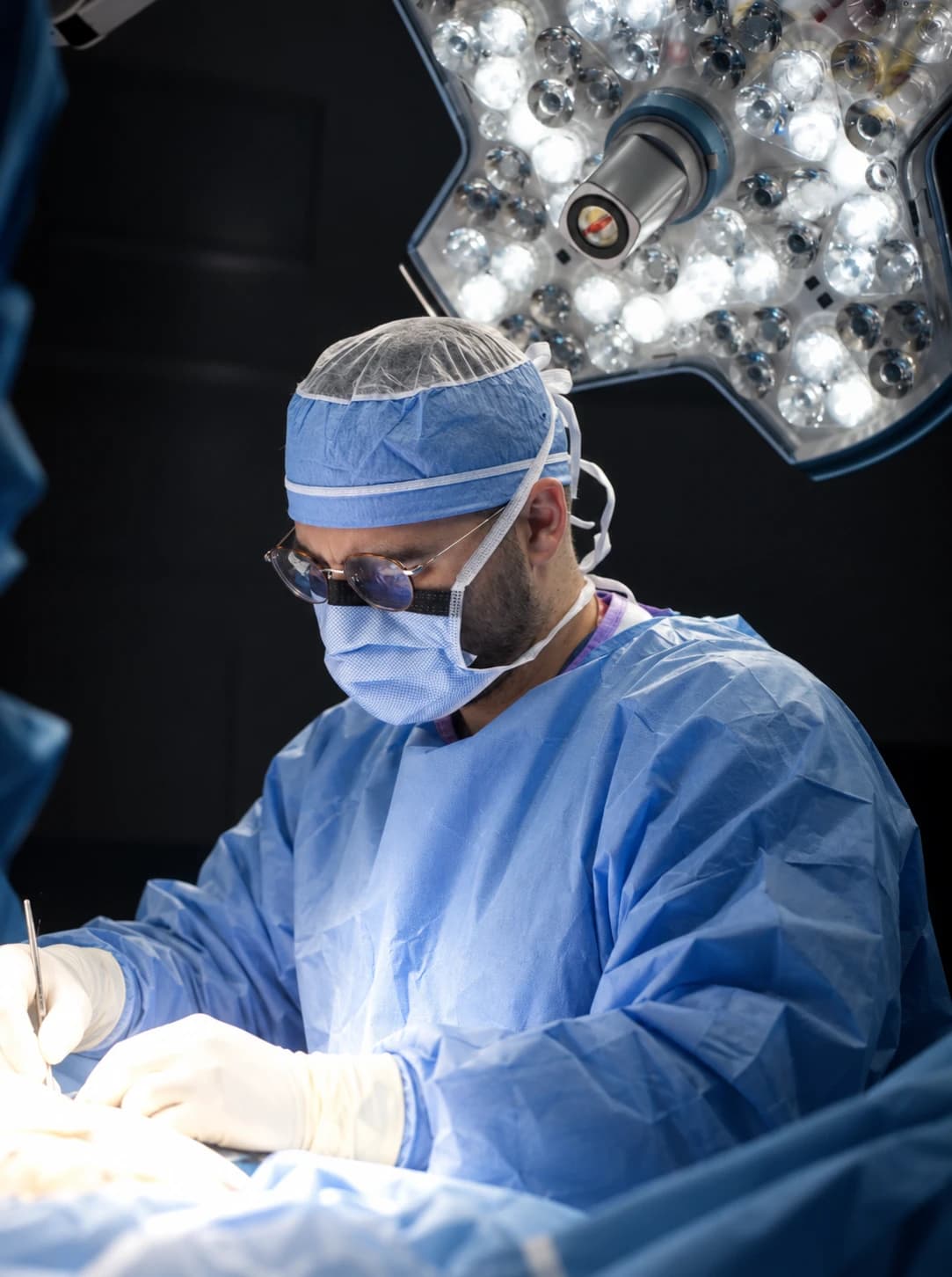
Reviewing surgeon
Foot and Ankle Surgeon at Limb Salvage Institute, a specialty practice of Ozturk Foot & Ankle. Dr. Ozturk is double board certified, as a Diplomate of the American Board of Podiatric Medicine (DABPM) and a Fellow of the Academy of Physicians in Wound Healing (FAPWH), and is a Fellow of the American Society of Podiatric Surgeons (FASPS) and the American Society of Podiatric Medicine (FASPM).
References
- 1.Senneville É, Albalawi Z, van Asten SA, Abbas ZG, Allison G, Aragón-Sánchez J, et al. IWGDF/IDSA guidelines on the diagnosis and treatment of diabetes-related foot infections (IWGDF/IDSA 2023). Diabetes Metab Res Rev. 2024;40(3):e3687. PubMed 37779323 (external site)
- 2.Aragón-Sánchez J, Lázaro-Martínez JL, Hernández-Herrero C, et al. Does osteomyelitis in the feet of patients with diabetes really recur after surgical treatment? Natural history of a surgical series. Diabet Med. 2012;29(6):813-8. PubMed 22151429 (external site)
- 3.Game FL, Jeffcoate WJ. Primarily non-surgical management of osteomyelitis of the foot in diabetes. Diabetologia. 2008;51(6):962-7. PubMed 18385975 (external site)
- 4.Lavery LA, Peters EJ, Armstrong DG, et al. Risk factors for developing osteomyelitis in patients with diabetic foot wounds. Diabetes Res Clin Pract. 2009;83(3):347-52. PubMed 19117631 (external site)
- 5.Lam K, van Asten SA, Nguyen T, et al. Diagnostic Accuracy of Probe to Bone to Detect Osteomyelitis in the Diabetic Foot: A Systematic Review. Clin Infect Dis. 2016;63(7):944-8. PubMed 27369321 (external site)
- 6.Senneville E, Lombart A, Beltrand E, et al. Outcome of diabetic foot osteomyelitis treated nonsurgically: a retrospective cohort study. Diabetes Care. 2008;31(4):637-42. PubMed 18184898 (external site)
- 7.Lázaro-Martínez JL, Aragón-Sánchez J, García-Morales E. Antibiotics versus conservative surgery for treating diabetic foot osteomyelitis: a randomized comparative trial. Diabetes Care. 2014;37(3):789-95. PubMed 24130347 (external site)
- 8.Tone A, Nguyen S, Devemy F, et al. Six-week versus twelve-week antibiotic therapy for nonsurgically treated diabetic foot osteomyelitis: a multicenter open-label controlled randomized study. Diabetes Care. 2015;38(2):302-7. PubMed 25414157 (external site)
- 9.Henke PK, Blackburn SA, Wainess RW, et al. Osteomyelitis of the foot and toe in adults is a surgical disease: conservative management worsens lower extremity salvage. Ann Surg. 2005;241(6):885-92; discussion 892-4. PubMed 15912038 (external site)
- 10.Tan JS, Friedman NM, Hazelton-Miller C, et al. Can aggressive treatment of diabetic foot infections reduce the need for above-ankle amputation? Clin Infect Dis. 1996;23(2):286-91. PubMed 8842265 (external site)
- 11.Lázaro-Martínez JL, García-Madrid M, García-Álvarez Y, et al. Conservative surgery for chronic diabetic foot osteomyelitis: Procedures and recommendations. J Clin Orthop Trauma. 2021;16:86-98. PubMed 33680830 (external site)
- 12.Gariani K, Pham TT, Kressmann B, et al. Three Weeks Versus Six Weeks of Antibiotic Therapy for Diabetic Foot Osteomyelitis: A Prospective, Randomized, Noninferiority Pilot Trial. Clin Infect Dis. 2021;73(7):e1539-e1545. PubMed 33242083 (external site)
- 13.Tardáguila-García A, Sanz-Corbalán I, García-Alamino JM, et al. Medical Versus Surgical Treatment for the Management of Diabetic Foot Osteomyelitis: A Systematic Review. J Clin Med. 2021;10(6):1237. PubMed 33802685 (external site)
This article is general health information and isn’t a substitute for advice from a clinician who knows your history. Read our medical disclaimer and how we review content.
Learn more about this
Condition
Osteomyelitis (bone infection)
An infection of the bone in the foot, usually spreading from a diabetic foot ulcer, treated with culture-based antibiotics and often surgery to remove the infected bone.
Treatment
Osteomyelitis surgery
An operation to remove infected bone in the foot, usually beneath a diabetic foot ulcer, so the wound can heal, often with a shorter course of antibiotics.
Treatment
Partial foot amputation
Surgery that removes only the part of the foot that can’t heal, from a single toe to the midfoot, keeping as much of the foot as is safe, to help you keep walking.
Diagnosis guide
How wounds are evaluated
How a foot wound is evaluated, from the exam and measurements to the probe-to-bone test, cultures, X-rays, MRI, bone biopsy and circulation checks.
Diagnosis guide
Second opinion before amputation
When a second opinion before amputation is worth getting, when surgery can’t wait, what decides whether a foot can be saved, when amputation is the better choice, and how to prepare.
Keep reading
Limb salvage surgery
Transmetatarsal or Below-Knee Amputation? Why Saving Part of the Foot Matters
Keeping the heel and ankle can mean walking in a shoe instead of on an artificial leg, but a transmetatarsal amputation has to heal to pay off. What the studies show and what tips the choice.
8 min read
Limb salvage surgery
Toe-Tip Ulcers and Flexor Tenotomy: A Small Procedure, a Big Benefit
An ulcer on the tip of a bent toe is usually a pressure problem with a small fix. How a flexor tenotomy works, who it suits, what the trials found and the trade-offs.
8 min read
Ulcers & offloading
Why a Foot Wound Deserves Prompt, Thorough Care
A painless sore on the foot can be more serious than it looks. What the research shows about waiting, what thorough wound care covers, and when surgery is the step that saves the foot.
8 min read
On the Ozturk Foot & Ankle blog
General foot care and non-surgical basics, from our parent practice.