Toe-Tip Ulcers and Flexor Tenotomy: A Small Procedure, a Big Benefit
An ulcer on the tip of a bent toe is usually a pressure problem with a small fix. How a flexor tenotomy works, who it suits, what the trials found and the trade-offs.
Medically reviewed by Dr. Efe Ozturk · Last reviewed
Published 8 min read
A sore on the tip of a toe can look minor, but it deserves the same attention as any foot wound: a systematic review notes that toe-tip ulcers often lead to infection and amputation.[5] The hopeful part: the cause is usually mechanical, and a small procedure can change it. This article explains flexor tenotomy for toe ulcers: how it works, who it suits, what the studies found and the trade-offs. For every procedure that takes pressure off ulcers, see offloading surgery; for how bent toes cause ulcers, see ulcers caused by foot deformity.
Why the tip of a bent toe breaks down
Hammertoes, claw toes and mallet toes are among the most common foot deformities in people with diabetes, and they raise the risk of foot ulcers.[6] In a hammertoe, the toe is drawn into a bent position, so its tip is driven into the ground and the top of the toe rubs against the roof of the shoe.[6] On a foot with normal feeling, that pressure hurts, and you change your shoes or your step. When diabetes has dulled the nerves, the alarm never sounds,[6] so the same patch of skin takes the load step after step.
Footwear, silicone toe props and padding are the standard first treatments, but these ulcers are hard to offload with conventional devices.[5]
What a flexor tenotomy is
A flexor tenotomy divides one or both of the tendons that curl the toe downward, through a puncture under the toe made with a needle or a fine blade, instead of an open operation.[1] With that pull released, the toe joints straighten and the pressure under the toe drops.[7] The guideline panel calls it relatively straightforward and suited to an outpatient clinic,[3] and it needs no general anesthesia or cast afterward.[7]
Dr. Ozturk performs flexor tenotomy for the toe ulcers that need it. A Foot and Ankle Surgeon who is also board certified in wound care (FAPWH), he follows the ulcer and the toe behind it until the skin has closed. The guideline’s recommendation covers flexible toes.[3] If the toe has stiffened and no longer straightens when pressed, a hammertoe correction may fit better; Dr. Ozturk performs those too, and our Center for Lower Extremity Surgery explains hammertoe surgery (external site).
Who it suits, and who it doesn’t
The people who tend to do well share a few features:
- An ulcer on the tip or underside of the second to fifth toe, caused by a flexible bent toe, on a foot with nerve damage. For this ulcer, the 2023 offloading guideline of the International Working Group on the Diabetic Foot (IWGDF) strongly recommends a flexor tenotomy, based on moderate-certainty evidence.[3] After a randomized trial, the panel now treats it as a first-line option rather than a fallback once other care has failed.[3]
- A warning sign before the skin opens. For a flexible hammertoe with a pre-ulcerative lesion, the prevention guideline suggests considering a tenotomy.[8] Those lesions include callus, blisters and abrasions.[3]
- Enough blood flow to heal. Surgical offloading is not advised when blood flow to the foot is severely reduced.[3] A systematic review concluded that mildly reduced blood flow, or a bone infection, should not by itself rule a tenotomy out.[5] We start with noninvasive circulation testing at our practice; see circulation tests for foot wounds and why toe pressures can tell more than ankle pressures.
The big toe is different: the guideline limits its recommendation to the second to fifth toes, because the panel thinks big-toe ulcers are more likely caused by other deformities or a stiff joint, which a tenotomy wouldn’t address.[3] For a big-toe ulcer that doesn’t heal with non-surgical offloading, reshaping the joint (arthroplasty) is one option the guideline suggests considering.[3]
How the toe moves as you walk matters too. In a Spanish study of 142 feet, about one in five people with a past toe ulcer had a pattern driven by the tendons on top of the foot (extensor substitution), in which a tenotomy could worsen the deformity; the authors advise watching the toes during walking first.[9] We check whether the toe straightens by hand, watch it as you stand and walk, and take X-rays at the practice when needed.
What the research shows
The randomized trial that changed the guideline compared a needle tenotomy plus standard care with standard care alone in 95 people with diabetes and hammertoes.[4] Standard care meant callus trimming, foot-care teaching and adjusted offloading devices.[2] Among 16 people with an open ulcer, all eight who had a tenotomy healed, and sooner, against three of eight without one. Among 79 with an impending ulcer, one in the tenotomy group went on to an open ulcer, against seven with standard care alone. No serious adverse events were recorded.[4]
A pressure study within the trial shows why: peak pressure under the treated toes fell from about 206 to 61 kilopascals three months after the tenotomy, while it barely changed with standard care alone.[2] Earlier studies without a comparison group point the same way.[10,11,12]
| Study | Who was studied | What happened |
|---|---|---|
| Randomized trial, Denmark (2022) | 95 people with hammertoes and an ulcer or impending ulcer | Ulcers healed: 8 of 8 with a tenotomy, 3 of 8 without. Impending ulcers that opened: 1 with a tenotomy, 7 without. |
| Review of six studies (2017) | 264 tenotomies for ulcers and 57 done to prevent one | 97% of ulcers healed, in an average of 29.5 days; 6% came back; none of the preventive toes ulcerated. |
| Kearney et al. (2010) | 58 tenotomies in 48 people with toe-tip ulcers | 98.3% healed; 12.1% recurred over an average of 28 months; 5% had a soft-tissue infection. |
| Tamir et al. (2014) | 103 tip-of-toe ulcers | 98% healed at 4 weeks; in 8%, a neighboring toe later needed its own tenotomy. |
The trial was small, and most of the other evidence comes from studies without a comparison group; the guideline rates the certainty of the evidence as moderate.[3]
The trade-offs: transfer lesions and other limits
- Pressure can move to the next toe. Once a curled toe straightens, the toe beside it may carry more load and form its own callus or ulcer (a transfer lesion), the most common problem in a systematic review of 11 studies.[5] Rates vary: 14.5% of treated toes in an Australian series developed one,[1] and 28% of 50 people in a recent US series, most of whom needed a further tenotomy.[13]
- One toe or several. In a one-year Spanish study of preventive tenotomies, new ulcers on the neighboring toes were more common when a single toe was released than when several were, though most of those with several releases had a “floating toe” that no longer touched the ground.[14] We discuss whether to release one toe or more.
- Infection is uncommon but possible. In the series of 58 tenotomies, 5% had a soft-tissue infection, and the two people who lost a toe already had a bone infection beforehand.[11] A bone infection needs its own treatment; see bone infection in the foot and does osteomyelitis mean amputation?
- The curl can return. In a Danish follow-up about 12 years later, 5 of 22 released toes had curled again, and the authors note the procedure can simply be repeated. Of the 15 people examined, 14 had had a foot ulcer in those years; the authors linked this to the vulnerability of the diabetic foot, not the tenotomy, and urged close follow-up.[6]
What recovery looks like
In the reviewed studies, toe-tip ulcers took about two to four weeks on average to heal after a tenotomy.[5] In the guideline’s evidence, a removable ankle-high offloading device protected the foot while the ulcer closed.[3] In one outpatient series, ulcers healed in about 10 days on average, and every participant strongly agreed they were satisfied with the result.[1] We see you every week or two and measure the ulcer at each visit; see wound care visits.
Afterward, your shoes matter. Pressure under the toes changes after a tenotomy, so the Dutch authors advise reassessing footwear,[7] and the prevention guideline recommends therapeutic footwear that relieves pressure to help keep a healed plantar ulcer from coming back.[8] We fit therapeutic shoes and custom inserts; see protective footwear and keeping your foot in remission. A two-minute daily foot check (external site) helps you catch a new callus on a neighboring toe early.
Common questions
Does a flexor tenotomy hurt?
In the studies, it was done through a small puncture under the toe with a local anesthetic, without general anesthesia.[6,7] Many people with these ulcers already have reduced feeling in their toes. Pain under the foot afterward has been reported in some series, so ask what to expect.[5]
Will my toe look or feel different afterward?
It usually lies straighter.[7] It may also stop pressing down on the ground, a “floating toe”, which was common when several toes were released.[14]
Can a tenotomy prevent an ulcer before one forms?
For a flexible hammertoe that already shows a warning sign such as callus or a blister, guidelines suggest considering it.[8,3] In the randomized trial, one impending ulcer opened after a tenotomy, against seven with standard care alone.[4]
Can the big toe be treated the same way?
Usually not. The guideline’s recommendation covers the second to fifth toes only.[3] Big-toe ulcers are covered in ulcers caused by foot deformity.
Will the ulcer come back?
It can. Recurrence was 6% across six studies,[10] and 12.1% over an average of 28 months in a larger series.[11] Over many years the toe can curl again, and the tenotomy can be repeated.[6]
The bottom line
An ulcer on the tip of a flexible bent toe is a pressure problem, and a flexor tenotomy is a small, guideline-backed way to take that pressure away. It heals most of these ulcers within weeks and can stop new ones from opening. Pressure can shift to a neighboring toe, so follow-up and the right shoes stay part of the plan. Have a toe sore looked at early; see why early wound care matters. For an ulcer under the ball of the foot, read about Achilles lengthening for forefoot ulcers.
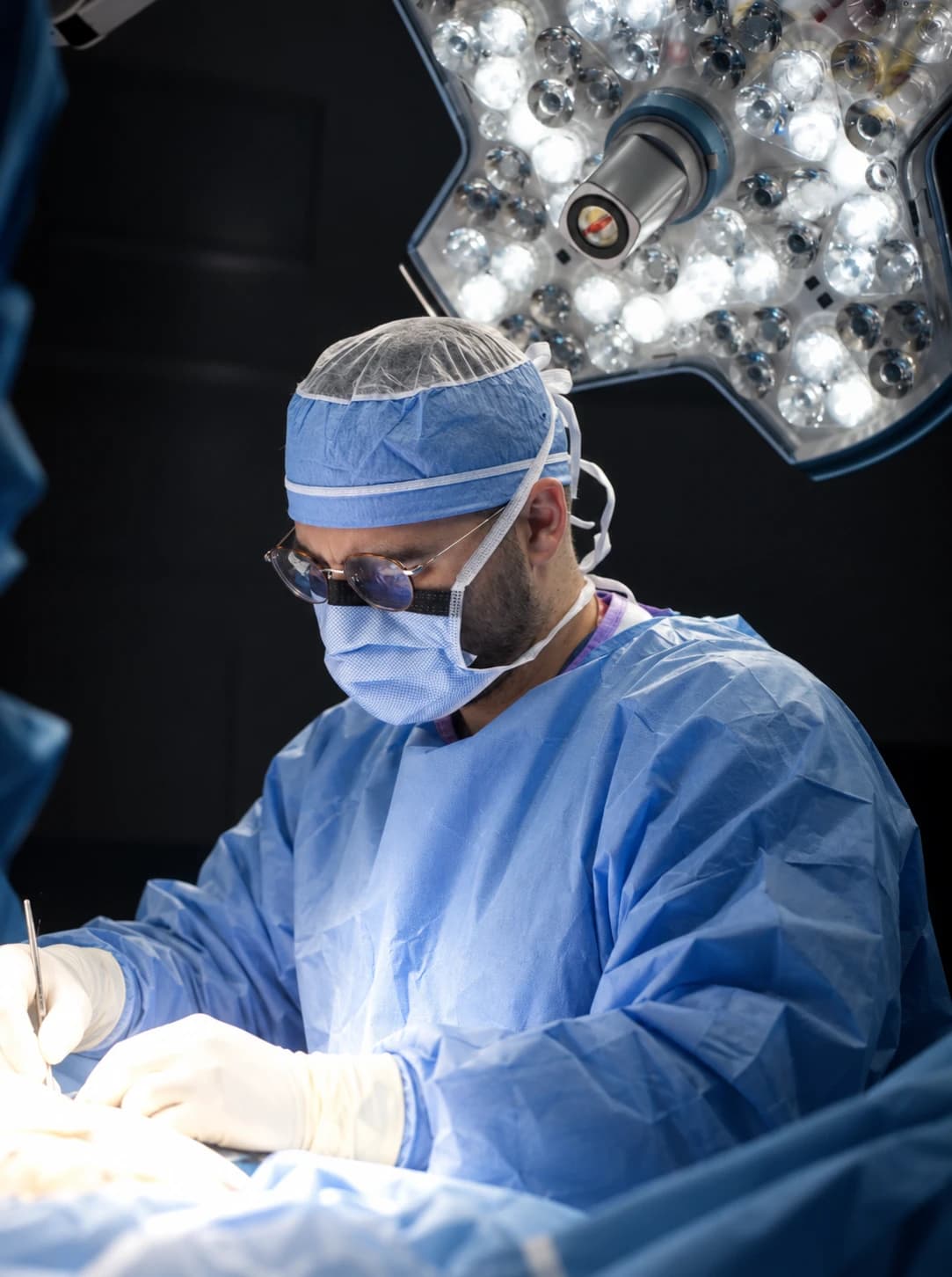
Reviewing surgeon
Foot and Ankle Surgeon at Limb Salvage Institute, a specialty practice of Ozturk Foot & Ankle. Dr. Ozturk is double board certified, as a Diplomate of the American Board of Podiatric Medicine (DABPM) and a Fellow of the Academy of Physicians in Wound Healing (FAPWH), and is a Fellow of the American Society of Podiatric Surgeons (FASPS) and the American Society of Podiatric Medicine (FASPM).
References
- 1.Smith SE, Miller J. The Safety and Effectiveness of the Percutaneous Flexor Tenotomy in Healing Neuropathic Apical Toe Ulcers in the Outpatient Setting. Foot Ankle Spec. 2020;13(2):123-131. PubMed 30999784 (external site)
- 2.Askø Andersen J, Rasmussen A, Engberg S, et al. Effect of flexor tendon tenotomy of the diabetic hammertoe on plantar pressure: a randomized controlled trial. BMJ Open Diabetes Res Care. 2024;12(6):e004398. PubMed 39631844 (external site)
- 3.Bus SA, Armstrong DG, Crews RT, Gooday C, Jarl G, Kirketerp-Moller K, et al. Guidelines on offloading foot ulcers in persons with diabetes (IWGDF 2023 update). Diabetes Metab Res Rev. 2024;40(3):e3647. PubMed 37226568 (external site)
- 4.Askø Andersen J, Rasmussen A, Engberg S, et al. Flexor Tendon Tenotomy Treatment of the Diabetic Foot: A Multicenter Randomized Controlled Trial. Diabetes Care. 2022;45(11):2492-2500. PubMed 36151947 (external site)
- 5.Calvo-Wright MM, López-Moral M, García-Álvarez Y, et al. Effectiveness of Percutaneous Flexor Tenotomies for the Prevention and Management of Toe-Related Diabetic Foot Ulcers: A Systematic Review. J Clin Med. 2023;12(8):2835. PubMed 37109172 (external site)
- 6.Andersen JA, Rasmussen A, Frimodt-Møller M, et al. Long Term Outcomes After Flexor Tendon Tenotomy of the Diabetic Foot. Clin Med Insights Endocrinol Diabetes. 2025;18:11795514251314787. PubMed 39995589 (external site)
- 7.Mens MA, van Netten JJ, Busch-Westbroek TE, et al. Biomechanical and musculoskeletal changes after flexor tenotomy to reduce the risk of diabetic neuropathic toe ulcer recurrence. Diabet Med. 2022;39(4):e14761. PubMed 34877692 (external site)
- 8.Bus SA, Sacco ICN, Monteiro-Soares M, Raspovic A, Paton J, Rasmussen A, et al. Guidelines on the prevention of foot ulcers in persons with diabetes (IWGDF 2023 update). Diabetes Metab Res Rev. 2024;40(3):e3651. PubMed 37302121 (external site)
- 9.Sanz-Corbalán I, Lázaro-Martínez JL, García-Álvarez Y, et al. Digital Deformity Assessment Prior to Percutaneous Flexor Tenotomy for Managing Diabetic Foot Ulcers on the Toes. J Foot Ankle Surg. 2019;58(3):453-457. PubMed 30738611 (external site)
- 10.Bonanno DR, Gillies EJ. Flexor Tenotomy Improves Healing and Prevention of Diabetes-Related Toe Ulcers: A Systematic Review. J Foot Ankle Surg. 2017;56(3):600-604. PubMed 28476394 (external site)
- 11.Kearney TP, Hunt NA, Lavery LA. Safety and effectiveness of flexor tenotomies to heal toe ulcers in persons with diabetes. Diabetes Res Clin Pract. 2010;89(3):224-226. PubMed 20580458 (external site)
- 12.Tamir E, Vigler M, Avisar E, et al. Percutaneous tenotomy for the treatment of diabetic toe ulcers. Foot Ankle Int. 2014;35(1):38-43. PubMed 24131679 (external site)
- 13.Skolnik J, Speis D, Sciotti N, et al. Safety and Efficacy of Flexor Tenotomy for Treatment of Digital Ulcerations and Pre-Ulcerative Lesions. Foot Ankle Spec. 2026. Online ahead of print. PubMed 42294603 (external site)
- 14.López-Moral M, Molines-Barroso RJ, García-Álvarez Y, et al. Safety and Efficacy of Several Versus Isolated Prophylactic Flexor Tenotomies in Diabetes Patients: A 1-Year Prospective Study. J Clin Med. 2022;11(14):4093. PubMed 35887856 (external site)
This article is general health information and isn’t a substitute for advice from a clinician who knows your history. Read our medical disclaimer and how we review content.
Learn more about this
Treatment
Offloading surgery
Operations on the calf, Achilles or toe tendons (and sometimes a metatarsal bone) that take pressure off an ulcer so it heals and is less likely to come back.
Condition
Ulcers from foot deformity
Ulcers that form over bent toes, bunions and prominent bones on a foot with reduced feeling, and how offloading and surgery heal them.
Condition
Diabetic foot ulcers
Open sores on the feet of people with diabetes, and the step-by-step care, including surgery when it’s needed, that aims to heal them and keep them closed.
Diagnosis guide
Circulation tests
How ankle and toe pressures, Doppler waveforms, TcPO2 and artery imaging measure blood flow to a foot wound, and how the results guide healing, surgery and vascular referral.
Condition
After an ulcer heals
How to keep a healed diabetic foot ulcer from coming back, from protective shoes and daily checks to surgery that reduces the pressure behind it.
Keep reading
Limb salvage surgery
Achilles Lengthening for Forefoot Ulcers That Keep Coming Back
A tight calf can keep an ulcer under the ball of the foot from healing or staying healed. Who the operation suits, what the trials found and the trade-offs.
9 min read
Circulation & healing
Why Ankle Pressures Can Look Normal With Diabetes: Toe Pressures Explained
Calcified leg arteries can make ankle pressures look normal, or even high, when the foot is short of blood. Why toe pressures give a truer picture, and how the numbers shape wound care and surgery.
9 min read
Ulcers & offloading
Why a Foot Wound Deserves Prompt, Thorough Care
A painless sore on the foot can be more serious than it looks. What the research shows about waiting, what thorough wound care covers, and when surgery is the step that saves the foot.
8 min read
On the Ozturk Foot & Ankle blog
General foot care and non-surgical basics, from our parent practice.