Pickleball foot and ankle injuries: how to play longer and hurt less
Pickleball injuries are rising fast. The foot and ankle injuries to know, and how to keep playing without them.

By Efe Ozturk, DPM
· 3 min read
Medically reviewed by Efe Ozturk, DPM · Last reviewed
Pickleball has swept through parks, gyms and community centers, and for good reason: it’s social, easy to learn and a great workout. It’s also the reason a lot of new patients walk (or limp) into foot and ankle offices.
Why injuries are rising
The number of pickleball players in the United States grew from about 3.3 million to 4.8 million between 2019 and 2021, and injuries tend to rise as a sport grows.[1] An analysis of national emergency department data found pickleball injuries increasing year after year, with more than 90% of injured players aged 50 or older.[2] The most common injuries were strains or sprains (29%) and fractures (28%), and the lower extremity was the most commonly injured part of the body (32%).[2]
The court is smaller than a tennis court, but the game is full of quick lateral steps, lunges, stops and starts, often by players who hadn’t been doing much of that before they picked up a paddle.
The foot and ankle injuries to know
- Ankle sprains, from a quick sideways step or landing on another player’s foot. See sprained ankle recovery.
- Achilles tendinopathy and rupture. A sudden push-off to chase a drop shot is a classic moment for an Achilles rupture: a pop, a feeling of being kicked in the back of the leg, and weakness pushing off. See Achilles tendon.
- Heel pain and plantar fasciitis, from playing many hours on hard courts in unsupportive shoes. See morning heel pain.
- Fractures from falls, including fractures of the ankle and the fifth metatarsal on the outer edge of the foot.
- Turf-toe-style sprains of the big toe from pushing off hard. See turf toe.
How to play longer and hurt less
- Wear court shoes, not running shoes. Running shoes are built for forward motion; court shoes support side-to-side movement and have a flatter, grippier sole.
- Warm up for five to ten minutes: brisk walking, side shuffles, calf raises and gentle lunges.
- Build up gradually. If you’re new or returning, start with shorter sessions and add time over weeks, not days.
- Strengthen your calves and practice balance. Heel raises and single-leg balance protect the Achilles and ankles.
- Don’t backpedal for lobs. Turning and moving sideways is safer than stepping backward; falls backward cause many fractures.
- Replace worn shoes, and consider inserts if you have heel pain or flat feet. See custom orthotics.
Coming back after an injury
Return to the court is based on what you can do, not the calendar: walking and jogging without a limp, side shuffles and quick direction changes without pain, and strength close to the other side. Our sports medicine team builds that plan around your game.
When to see a podiatrist
About the author
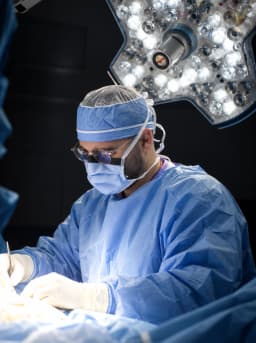
Efe Ozturk, DPM
Foot and Ankle Surgeon. Dr. Ozturk is double board certified, as a Diplomate of the American Board of Podiatric Medicine (DABPM) and a Fellow of the Academy of Physicians in Wound Healing (FAPWH), and is a Fellow of the American Society of Podiatric Surgeons (FASPS) and the American Society of Podiatric Medicine (FASPM). Trained in forefoot and rearfoot reconstructive surgery at Morristown Medical Center; sees patients in Lyndhurst, Paramus and Millburn.
References
- 1.Azar FM, Lamplot JD, Bernholt DL, Spence DD. Pickleball: A Standard Review of Injury Prevalence and Prevention in a Rapidly Growing Sport. J Am Acad Orthop Surg. 2024;32(22):e1130-e1141. PubMed 39079099 (external site)
- 2.Forrester MB. Pickleball-Related Injuries Treated in Emergency Departments. J Emerg Med. 2020;58(2):275-279. PubMed 31796221 (external site)
This is general health information and isn’t a substitute for advice from a clinician who knows your history. Read our medical disclaimer and how we write and review content.
More from the blog
Sports & running
Pain on the outside of the ankle: peroneal tendon problems
Ankle pain that won’t settle after a sprain may be the peroneal tendons. The signs, and how they’re treated.
Sports & running
Sprained ankle recovery: the first 72 hours and getting back to sport
A week-by-week plan for a sprained ankle, from the first days to getting back to your sport.
Sports & running
Achilles pain in runners: load, rest and recovery
Why runners get Achilles pain, why rest isn’t the answer, and how to recover without losing your season.